Foojay Podcast #11: Looking Back to 2022
 Frank Delporte
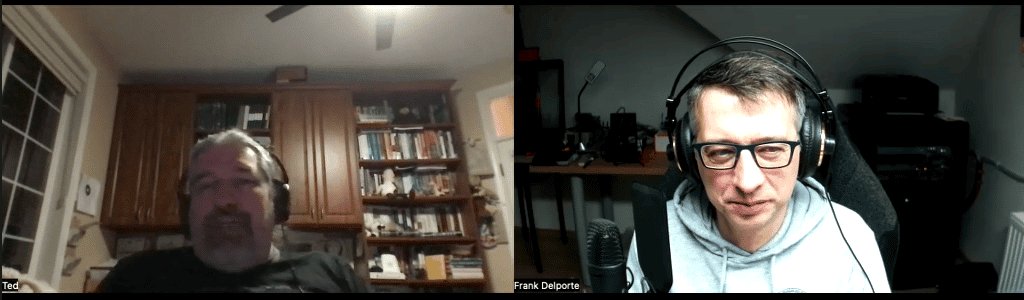
A few weeks ago, Ted Neward published a post in which he reviewed the predictions he made one year ago and added a long list of predictions for 2023.
In this Foojay Podcast episode, we talk about these predictions, and we even found an analogy between what has happened at Twitter in the last months and the history of Java!
Podcast Apps
You can listen and subscribe to the Foojay Podcast on:
- Spotify
- Apple Podcasts
- And most others…
Guests
- Ted Neward (@tedneward@hachyderm.io, @tedneward)
Podcast host
- Frank Delporte (@frankdelporte@foojay.social, @frankdelporte)
Content
- 00'00 Intro and music
- 00'13 About the topic of this podcast
- 00'28 Introduction of Ted and Frank
- 01'40 Goal of the predictions
- 03'53 Looking back at the predictions of 2022
- 05'30 “Work-from-home will become normalized as part of the landscape”
- 13'00 “Microservices start to give way back to deliberate monoliths "
- 19'40 “Demand for full-stack developers will continue to leave companies high-and-dry "
- Be hungry, humble, and smart!
- https://www.reddit.com/r/ProgrammerHumor/comments/jo4b6s/recruiters_be_like/
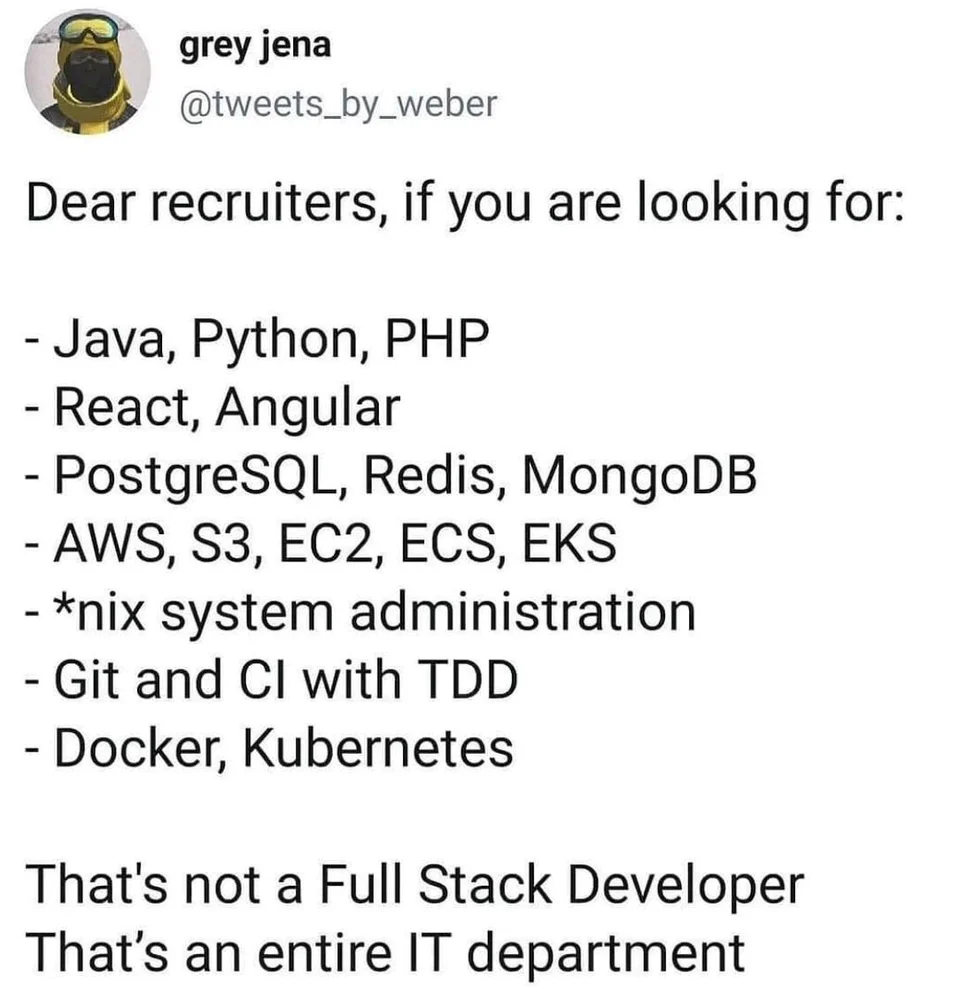
- 26'39 “2023 will be the year we try to figure out what to do with all this AI stuff "
- Devoxx Belgium 2022 AI intro movie
- 37'49 “Hiring will accelerate at the end of 1Q/2023”
- 46'03 “BOLD TWITTER TAKE: Elon will sell Twitter (perhaps involuntarily) at the end of 2023, to another tech firm (like Microsoft or Oracle) "
- https://foojay.io/today/foojay-mastodon-service-here-it-is/
- Comparing to the history of Java when it got bought by Oracle.
- 54'37 “Cloud will begin to shift”
- 1:04'32” Looking for an engineering or devrel manager? Hire Ted!
- 1:05'16” What will be the next “oriented”?
- Functional versus or combining services programming?
- Low-code and no-code?
- https://ballerina.io/?
- 1:13'51” Conclusion
Transcript
Automatically generated from the audio, so it can contain errors in names and technical terms. Suggest a correction.
[0:00] Hello and welcome to this new edition of the Foojay podcast where we look back at the post year and what 2023 will bring us all your note OpenJDK today we have a special podcast Edition as we only have one guest Ted new words published a long Post in which he reviewed the predictions he made one year ago and added a long list of predictions for this new year welcome tets can you introduce yourself please hi my name is Ted Neward and as I say on my bio for conferences and whatnot I’m a big geek period full stop the rest is all details that most people don’t care about I’ve been in Tech since since writing applesoft basic code in 1978 on an Apple II plus and I’ve been writing these predictions now for let’s see 2005 so 18 years each year I do a predictions post of one form or another and I keep them all up on the blog so if anybody wants to see how you know how accurate I’ve been over the years more than welcome to go take a look yeah we definitely will add the link to the podcast show notes that everyone can review these all these predictions I’m Frank I’m a Java developer and technical writer at Azul
[1:20] And making these podcasts yeah out of interest and as you say a geek I consider these as a quality trademark a geek and a nerd and I started with the Commodore 64 so it’s about the same time that we started experimenting with all this technology stuff before we start reviewing and looking forward why what is your goal in creating these lists is it a challenge for yourself well it’s it’s a combination of things right part of it is I read a sort of a business book number of years ago like I don’t know a decade ago or something I think it was called super predictors and it was analyzing you know people who make predictions and then looking at the people who are really good at predictions and it kind of you know gave me a sense of yeah I want to try this I want to try to hold myself up to it I’ll do it you know firmly in the space that I think I know a fair amount about but the other is very honestly going way back I’ve watched year after year all these these you know the gartners and the deloittes and so forth and they charge just ridiculous sums of money to do incredibly vague predictions I mean you
[2:42] Know they’re almost Nostradamus like in the sense that we predict Tech will get bigger okay that’s not really saying any we think AI will be a force to be reckoned with I mean that’s it’s like reading the astrology column in the newspaper right mystery is due to strike your life and you say oh I wonder what that could mean oh my gosh mystery has struck my life you know the gullible love it and the cynical get nothing from it I thought you know let me take a pass at it let me see and the first year I did it had a couple of people say yeah that was kind of fun to read and frankly you know it’s it’s an opportunity I mean as humans we love ceremonies anyway so doing something at the end of the year closing out one year opening up the new year it’s just you know it’s it’s you know it’s it’s kind of a scratching an itch personally and you know kind of testing myself professionally how accurate can I be that’s part of the reason why I go back every year and look at my predictions from the previous year to see how accurate I was if we look back at the prediction of 2022 were you happy with
[3:57] The results I came in above average usually I’m you know I’m at about 50 percent in terms of how I score you know and I explain my scoring I do it very simply it’s a plus one a minus one or a zero for a given prediction this year I think I came out like 65 you know meaning I did better than normal which means either the predictions I made were not particularly challenging or I had I don’t know deeper Insight or better luck or something I don’t know I mean on the one hand yeah I’m happy but on the other hand some of the stuff I predicted was kind of sad you know so like I talked about the complete collapse of the cryptocurrency and I’ve been actually saying that for a couple of years now and lo and behold they did and it’s not like I’m happy about it because lots of people lost lots of you know savings and hard-earned money and whatnot but I’m happy that people on the whole are starting to wise up to the Ponzi scheme that is nfts and cryptocurrencies and so forth so I’m kind of happy but I’m kind of not you know so it’s it’s hard to say on that particular one but
[5:14] All of them kind of you know mix together like that okay definitely some some stuff happened that I wasn’t able to predict like a new war in Ukraine and what happened within the last year so yeah a part of the technical challenges yeah we also have these kind of stuff now if there’s one thing we can think of it for it’s the work from home which yeah totally changed how people work how they yeah how you oh yeah cooperate with your employer you say that this will change further in this year what do you think about that I think what’s going to happen is it’s going to normalize right I think there are a number a lot of people sort of assumed that when covid hit we would all work from home and then as soon as the pandemic was over everything would go back to normal that is to say everything would go back to the way that it was and what we’re finding is I mean a the pandemic lasted longer than anybody thought it would right I mean with very few exceptions most of the people at least the people that I talk to and the articles that I read you know the predictions were from six months out to
[6:26] 12 months nobody really predicted that and technically if you talk to the CDC and other medical professionals you know it’s still going right the Center for Disease Control is still recommending that people mask up we’re kind of burying that because it’s not very exciting news and we don’t particularly like it but I mean technically the pandemic is still going on we’ve just kind of said well we have vaccines now we’ll deal with it right yeah yeah we basically have normalized the idea of okay you’ll catch covet every once in a while and for the people who are you know at risk people who are immunosuppressed that’s kind of collectively where we as a western Society have have taken things but going back covet introduced work from home and before covid work from home was one of those things that was really a I mean it was the exception to the rule most companies if you were going to talk about remote work you really had to be a you had to be a stalwart performer you really had to have you know major Mark within the company and built all this credibility and so forth before they would consider letting you work
[7:44] From home or it was a you know once a week maybe twice a week again if you were really really high performing kind of individual but you know covid absolutely normalized it for almost anybody right obviously Frontline workers people who are doing you know in-person services like house cleaning and so forth that wasn’t an option but for those of us in the tech space I mean realistically speaking 98 of all the technology jobs can be done remotely I mean that’s basically what the cloud has proven even before that right we don’t even need people to walk the server racks anymore because we have people to do that we call them Microsoft and we call them Google and we call them Amazon you know Etc covet got all of us to work from home and set up our home offices and a lot of us said this is not bad this is I mean yeah I miss my co-workers I miss being able to go out to lunch with people and so forth but this is not terrible and for a number of people it solved a number of logistical issues and don’t get me wrong I’m not saying everybody loves work from home right it can get very very isolating and you can feel very very
[8:54] Alone particularly if you’re the only one in the apartment or in the house or whatnot but then when the pandemic quote unquote was over a lot of companies turned around and said oh everybody back to the office and a bunch of people in Tech said no why should I and Company I mean Disney just this week Bob Iger came back and said people you know Disney employees four days a week from the office and I think what’s going to happen is there’s going to be an absolute flight of talent from Disney because of that because enough companies are going to say particularly the smaller the company the more likely they are to do remote because now we know we can do it and remote opens up a couple of things that didn’t have before most notably I can draw Talent from anywhere in the world right as long as my company can figure out how to work asynchronously that’s the key part that’s the part that everybody finds Difficult about work from home or work from anywhere is the guy that we have to work asynchronously now but once we figured out how to work it asynchronously once we know how to do things without having to call meetings where
[10:08] Everybody has to be the same point on the time space continuum now all of a sudden you’ve opened yourself up to getting the best talent from anywhere within a certain time zone range right for us in the states we span four time zones that’s pretty reasonable Europe spans three time zones that’s pretty reasonable cross-continent can be a little tricky not impossible right as you yourself know but you know it’s certainly easy to do I mean I spent a year and a half working for a company that was in the Eastern Time Zone while I’m over here in Pacific and it was three hour offset and we were able to navigate it quite comfortably and so that’s why I think the work from home thing is going to get normalized as basically just another location for a lot of companies there are some there are some issues that pop up most notably with the Byzantine tax system that we have in this country right because different states have different rules regarding income tax but I think those are navigable once once we start to figure out what those rules are but this year I think there are going to be a lot of companies that
[11:16] Are going to kind of settle in and say all right if you want to be remote that’s fine we like it if you come into the office but this is where our policy is going to be they’ll spend you know they’ll have spent the last year and this year kind of figuring out what works best across everybody in the company and then they’ll settle in and that’ll be their policy and I’m pretty sure it’ll include some amount of remote work some amount of remote workers it’s not only work from home it’s work from everywhere or anywhere yeah yeah and the war on Talent is yeah finding the people where they are yeah and the work from anywhere thing enables a number of things that companies would never really have thought to do I mean in the United States we have an incredibly strong hustle culture and so the idea of you know going to go visit my parents and still being able to turn in a full work day as opposed to having to take PTO that’s very attractive to a lot of people it’s very attractive to a lot of companies and I think that’s what’s going to kind of you know open it up and normalize it I don’t think we’re going
[12:16] To go back to the everybody always goes to the office culture that we had Circa 2019 and earlier and it’s also system that at Azul I think they call it follow the sun there is a support team in every time zone and that’s critical for what Azul does for what you know if if you sell a service worldwide right so if you’ve got a devops team and you’re having to manage your own Services you know support your own services having at the very least having some kind of support staff in on each of the major continents so that you can follow the sun like you said that’s huge that’s absolutely huge okay let’s go to following topics you have a long list of predictions so pick out a few one of them that I find interesting is the microservices discussion I’ve always find it difficult to Define what is a microservice I once heard it’s what the two Pisa team can build in two weeks or can replace in two weeks so eight people let’s say what is your definition of a microservice do you dare to say something I think that’s part of the problem is we never really could come to a definition from a technology
[13:34] A surface area point of view as to what a microservice was frankly we had some of the same problems when service first came along right service oriented architecture so and whatnot and lots of people were talking about services but we can never really decide on the granularity of a service right there were some people that I talked to a lot of service was essentially kind of like you know a database the database was a service and it could provide a lot of different functionality through a common interface other people I talked to said yeah the service is basically like a stored procedure to the database right it does exactly one thing narrowly well right it’s almost a single HTTP API endpoint was a service and that never got any better and then we got to microservices and realistically the microservice thing number one it was cargo colting from the beginning right it was people saying oh my gosh Amazon has been very successful we need to do what they do and Amazon was the one that coined the whole two Pizza team concept right the team should be no larger than what two large pizzas can
[14:44] Serve comfortably right nobody’s looking for you know more food after we have a team lunch the interesting thing is Amazon has since abandoned that they don’t really talk about they don’t really believe in the two Pizza team thing anymore because that’s really more a discussion of organizational design than it is distributed system design part of what they were going after was the idea of what we now call devops which actually some folks from thoughtworks had been really championing before Amazon picked it up and sort of made it their own and so microservices became this term that really kind of embraced a whole bunch of different things and conflated a whole bunch of different concepts there’s a little distributed system design there’s a little organizational design there’s a little devops in there there’s a whole bunch of different things practically speaking though because people didn’t really understand what microservices were doing except for the very highest levels which was we want to have lots of little Services all over the place they fell squarely into the Trap of the fallacies of distributed
[15:50] Computing and they made the same mistake that we made with distributed objects 20 years prior which was to say take code fragmented as finely as you can get it and then scatter it across the network because that’s a good thing and I mean anybody who lived through the corba days or the dcom days you know knows the pain that we suffered as we spent so much time on the network wire shipping stuff back and forth in order to accomplish some particular tasks and you know when I would bring this up to people they’d say oh yeah yeah but it’s microservices you know it’s almost a tautology because it’s a micro service it’s better okay but what about all the time we’re serializing deserializing what about all the time I mean these two Services work very closely together and as a matter of fact they’re coupled to the exact same database one of the things we lost from the whole service oriented thing was that you know data and persistence should be an implementation detail of the service Services should never share the same database right because that creates an implicit coupling between the two
[16:59] But I can’t tell you how many companies I talked to that said oh yeah we’ve got 37 different microservices well okay so you have 37 different databases oh don’t be ridiculous we’ve got one database otherwise how would we do Master data management and it’s like oh my God you just read you just read too many books this year didn’t you right kind of like the days back patterns I remember interviewing once at a company where the guy very proudly pulled the design patterns gang affordable coffee shelf and I’m like okay patterns I like where this is going and he opened up the front cover where it had a list of all the patterns and he had with a sharpie checked off each one because if they were patterns we have to use them somewhere in our code base because their patterns and therefore they’re good yeah so what I think is going to happen is we we’re going to look at all these microservices and realize okay there are some benefits to be had from modularizing our code shortly after the predictions I put up a blog post that said basically you want modules not microservices modularizing your code is a good thing
[18:09] Particularly if we follow some of the same design approach that microservices had but we can do that without having to actually scatter them across the network we can run them inside for example the same application server right you know I God forbid I use the term from the 2000s but it might actually be appropriate here we could run them on the same server run them in the same kubernetes cluster whatever you want to call it and that way we still get some of the benefits without losing all that time going across the network and we don’t you know there are certain scenarios where the act of taking data and hammering it into a shape that is suitable for transmission across the network only to hammer it back into its original shape I mean this is just silly right maybe choose an in-memory transport for two services that are closely clustered together but frankly if these are microservices that are both built by the same team just fuse them together into a single service because chances are good the team’s going to release in lockstep with itself anyway right I mean if that’s really the goal if it’s an
[19:15] Organizational design problem we want these teams to be single threaded that’s actually the term that Amazon prefers now this is the thing they do they’ll just build it as one service they’ll build it as a monolith but it’ll be a team monolith as opposed to a corporate monolith and I think that’s that’s probably the distinction that a number of people are going to lose as they start going back to monolithic construction also a bit part of this team you said here you have peoples with different roles on the other hand you have full stack Developers I find that a very hard term what is a full stack developer and you say the demand for them will grow but can you ever be a full stack developer in technology no no no no no the full stack developer is unicorn because here’s the thing right as so let’s roll back five six seven years right as you are starting to build a team and as you are looking to embrace some of this devops stuff right you want to start you know you want to blur the lines between development and operations so that you have one team handling both right now the fun thing about this is
[20:31] Recruiting is hard it’s difficult to find people with skills right and it’s hard to actually take different people with different skill sets and assemble them onto a team so the easiest thing for me to do as a hiring manager particularly because most of the time I’m going to take a job description and hand it off to a recruiter and make this their problem not mine I’m going to say here is a laundry list of everything I need a developer that has they need to know database design they need to know architecture they need to know infrastructure they need to know the networking stack they need to know react they need to know CSS they need to be user experience designers oh and they need to be race car drivers right I mean just you just start laying out all these different things that you need for the team and so when people said well what are you trying to do you’re basically asking for somebody who is an expert jack of all trades which by definition is you know is a nonsense it’s just a nonsensical term there’s actually a meme of that with all this list of requirements and then at the end
[21:42] Actually you’re asking for an I.T team you’re not asking for a food developer exactly and that’s the thing right whenever I see somebody looking for a full stack developer what I see is basically an admission of defeat by the hiring manager the hiring manager does not want to play puzzle games with their people anymore so what they want are 12 carbon copies of the same unicorn that’s basically what they’re saying right I want 12 carbon copies you know to a certain degree I have a certain amount of sympathy because when you look at American football right you need a quarterback you need some wide receivers you need some running backs and they all need to have different skill sets for each of these roles you could never take an offensive lineman and turn him into a cornerback right on the defense because they’re just built differently right they deliberately have you know trained their bodies differently to do different things and so forth and you know professional football coaches who are paid millions of dollars a year have a hard time assembling these puzzle pieces into such a way that the
[22:46] Whole is better than the sum of its parts so whenever somebody says hey I’m looking for a full stack developer what I’m hearing them saying is I’m looking for somebody that has all the skills because I am tired of trying to put together teams made out of disparate parts and frankly I lose respect for those hiring managers that do that it is hard I’ve done it I’ve put teams together from disparate Parts before and it is hard because there’s always that fear that one person that has that one skill then leaves the team and all of a sudden you’re high in track but this is partly where as a manager you need to go and you need to flesh out you need to cross-train right there’s somebody else on the team who’s interested in that skill so you do a little bit of shadowing and takes time it takes energy it takes effort it takes you away from the we’ve got to hit that deadline over there that’s where all of our focus should be no that’s that’s part of where the manager’s Focus would be part of the focus is how do I make my team stronger and part of that is doing cross-training and looking for opportunities even while
[23:53] The team is you know every every professional sports team is always trying to win the championship but they’re also always trying to set themselves up to win the championship next year and the year after you can’t abandon long-term planning and you know in favor of short-term planning etc etc so what I think is going to happen is you know people are going to still ask for full stack developers they’re not going to find them and you know what teams are going to do is some of what teams are doing now which is to say okay crap we can’t find any full stack developers and we can’t just leave these open positions open forever let’s take what we can get and we’re going to have to start putting puzzle pieces together again I mean it’s a thing it’s just it’s you know there’s no resolution beyond that yeah it’s not about looking for full stack developers it’s looking for good teammates who can take over who can learn yeah I’ve seen this in the past students who just left school who didn’t have the right experience but were eager to learn sometimes they are really the best solution oh the core criteria
[25:02] That I look for whenever I’m looking to staff up a team is I’m looking for people who demonstrate three things they’re hungry they’re humble and they’re smart right they’re hungry they want to do more than they currently do they want to make more they want to learn more you know whatever it is they’ve got hunger inside them that’s going to drive them to be more than they currently are they’re humble meaning they’re willing to admit when they don’t know things and are willing to listen to people that are you know they that know something more than them on a particular topic or a particular area and obviously smart right and here smart is yes you may have some core skills but also you’re smart enough to know how to learn right those are the three things I really want in a team and so you know if I’m currently working a c-sharp project and you show me a senior 10-year veteran c-sharp developer who is like yeah I’m a c-sharp developer I don’t really care about any of those other.net languages c-sharp 4 was good enough for me it should be good enough for anybody and then you show me a three-year job
[26:13] Developer who says I absolutely love for an opportunity to learn C sharp and see I will take the three-year job developer every time because they are hungry humble and smart the other one is just smart and one of the three is never better than three of the three yeah well you settled in technology you’re becoming outdated very fast okay yeah about the fast evolving Technologies AI what happens the last months is of course we knew that all these things were evolving but suddenly we had chat GPT what I’ve seen at devox in Antwerp they had a whole introduction movie generated with images from an AI system it was there already for quite some time but isn’t it going very fast now yes and no I mean chat GPT has really captured a lot of the you know there are these two aspects of artificial intelligence that have really captured the Public’s imagination right one is the ability to generate images based off of a plain text description right which like you said devox they had all you know the movie with all that computer generated art Etc the other is the ability for chat GPT to be able to take plain text and turn
[27:36] Around plain text responses right now there are several things which we’re going to discover in the coming year which I think are going to you know cool the Jets around some of this AI stuff right number one is as we’ve discovered there are a couple of legal issues that go along with some of this because you know all of this stuff has to be you know the current way in which we do a lot of this artificial intelligences with modeling right we train based on a given model and so what Microsoft did what GitHub did with co-pilot is it trained it on a whole bunch of Open Source Code what chat GPT did is it trained it off of a whole bunch of available Pros what the image recognition Valley did is it trained it off of a whole bunch of existing images and in many cases copyright and or attribution was not preserved because it’s actually pretty hard to do when you’re looking at an amalgamation of all of it this sets up some really interesting legal problems right because if for example I decide to write a fantasy fantasy fiction novel right and it happens to incorporate some ideas that Wizards of the Coast introduced as part
[28:53] Of their DND product I mean if they can prove definitively that this idea came from them and they had it first and I didn’t provide proper attribution and pay the proper license saying they’re able to hit me for a significant financial sum right now technically you could argue well I mean these ideas have been floating around all of human history for as long as man has been telling stories to one another how do you prove that blah blah this is where the copyright lawyers make all their money is being able to prove or disprove that I stole the idea from Wizards of the Coast but when we talk about these AI models all of a sudden there’s no Trail There’s No Smoking Gun of evidence that makes it clear and so now all of a sudden all of the content creators the Image Creators the pros creators the code creators find themselves on the same side because now all of a sudden I mean there’s a lot of Open Source folks who are like wait a minute we just trained co-pilot but you’re not you’re not giving anything back and they’re charging for it if you want to use it professionally exactly exactly you’re making money off of what
[30:01] Could reasonably consider the derivative work which violates the GPL very very very bluntly very basically right and lgpl and there’s some other licenses that don’t care if you use you know if you use this as inspiration and create a derivative work okay that’s fine that’s up to you just make sure you give attribution Creative Commons requires the attribution other you know there’s all these different licenses with all these different terms and co-pilot was trained off of all this code without any concern for licensing whatsoever as near as we can tell from the outside if there was some licensing you know if it’s there none of us outside of open AI have been able to see it the same thing is true of images the same thing is true of prose and so while they’re very exciting right I mean it’s really cool right buddy of mine was over here at the house a couple nights ago and while we’re drinking whiskey we’re talking about chat GPT and he’s like oh my God this is amazing I’m like yeah but it’s wrong half the time he’s like what I’m like seriously ask it to write a bio for me so he’s like all right you know chat EBT
[31:11] Right a bio for Ted Neward and it did and it got part of it right the part that it lifted directly off of the bio that I use for a number of different conferences but then it claimed that I was CTO and co-founder of a consulting company that I’ve never founded and never been CTO of but worked at like 12 years ago right and they claimed I was a member of the what is it was member of the Executive Board of the Java Community process which I’m pretty sure as you know is not true it also claimed that I was a board member of the International Association of software Architects which while I have spoken at their events sadly they have yet to recognize my stellar leadership and give me that role yeah but it’s a system that based on our next words prediction so if it makes sense to put this word after the previous one yeah then I saw a tweet of a professor who said I’m gonna ask my students to write a text with chat GPT and then find all the mistakes in it and correct it and then deliver me both and the process of going from what chat GPT gave and the final result yeah it’s it’s gives
[32:27] Titles of books which don’t exist but what we have seen particularly with both chapter and co-pilot as well as dally we’re seeing perhaps a significant Improvement to natural language processing the ability to take spoken language and be able to correctly infer what was being asked or what was being said but it’s not a general purpose artificial intelligence and so what’s going to happen is over this next year people are going to start exploring it I mean the most natural thing is oh my God chat Bots we’re going to use chat GPT for chat Bots and they’re going to wire chat GPT directly up to it paying an exorbitant licensing fee and then all of a sudden chat GPT is going to say hey welcome to Amazon what would you like me to do well I need you to take this back oh I’m so sorry how as compensation how about we give you a free look them up look them up how about we give you a free car right and all of a sudden Amazon’s on the hook to give somebody a free car and that’s when we’re going to start seeing pulling it back and saying now wait a second you yes understanding what people are saying and analyzing their
[33:43] Speech and you know acting very human you know questions of the Turing test start to come to mind here again but you can’t say stuff that’s not true you can’t say stuff that’s going to put us in a legal bind and so natural language processing yes we have made significant strides in that but what we’re going to find in 2023 is now what do we do with it how do we use this stuff successfully not to do really flashy demos but to in fact actually make you know to use this effectively within our company the precedent for this is really obvious everybody remembers IBM Watson right I mean Watson went on Jeopardy for crying out loud and won right and the Jeopardy champion of all time said I welcome our new robotic overlords and then what happened then where did he go what you know IBM tried very hard to sell Watson to a number of companies but found that they weren’t getting a whole lot of takers because the ability to answer trivia questions in the form of a question on a game show doesn’t translate well to me trying to Wrangle my Enterprise corporate data right and that’s that’s the part that we need to
[35:02] Wrestle with now 2023 and 2024 I think you’re going to see a number of folks creating some prototype projects that utilize these Technologies and then they’re going to start to realize the limitations and say oh now we get it right again it’s the classic Gardener curve right you know we’re not right now we are climbing that whole peak of Illusion for the whole peak of hype and very shortly we’re going to drop into the trough of disillusionment because that’s when we start to figure out what we can use it for you could give it for instance some code and ask what will be the result if you’re doing code reviews or if you’re getting into a new project some feedback on code or give me an example of this but yeah again is the result correct it’s yeah we’ll see some some very nice Evolutions I think but yeah I find it amazing on one hand and a bit Yeah frightening it’s dangerous yeah it’s dangerous I mean I think for people who are looking to understand the code right particularly if the comments appear to be out of date right the ability to because code has something that most
[36:13] Natural language doesn’t which is precise semantics right I mean there’s formal semantics around any programming language with the possible exception of pearl which is just a dumpster fire of a language anyway so we won’t include them amongst good programming languages but for every other language there’s a pretty nice formal semantics model about what this means so I can take code throw it at a system like copilot and say explain to me what this does and it’ll be able to and based on some of the knowledge of its model be able to tell you perhaps the first level above okay what this does is this which looks like it’s calculating a CRC right it’s still not going to tell us why we need this calculation of a CRC but I do think that just like we had automated code generators like javadoc to help us do some of the formatting and some of the heavy lifting of extracting parameters and doing the formatting and so forth I think we could start to see within the next 18 months tools that will help us do that for some of our code particularly for legacy code bases that could be very powerful it won’t tell us
[37:19] Why but it will tell us what and then we can perhaps annotate the why or annotate the what with the why in order to have some really nice you know long-term surviving documentation but again it’s going to take us a while to figure that out and figure out where and how that applies and how best to use it this year will be the year of figuring all that stuff out I’m looking forward to our chat in a year me too you say hiring will accelerate at the end of q1 of this year so we’ve seen massive layoffs at many big companies on the other hand small companies which are looking for people have benefits in this whole story do you think these big companies will come back to the hiring Market or do you see another Revolution part of what I think happened during 2020 and 2021 remember the labor market was white hot in Tech I mean companies were throwing ridiculous sums of money to try to hire developers right it was not unheard of for employee referrals for tech jobs to be five digit bonuses right we’ll give you ten thousand dollars fifteen thousand dollars if you can you know throw us a candidate who
[38:38] Makes it all the way through the interview process and gets a gets an offer it’s here for like three months it’s the typical terms of a hiring referral bonus I mean 15 grand right for some people that was 10 of their annual salary just for you know here here’s a friend you know and get them interviewed and so forth companies were so paranoid particularly the big ones were so paranoid that they were going to be labor labor short that I think what they did is they over hired I think what and the big companies in particular they tend to have a lot of room to be able to carry a little excess weight right with fat whatever you want to call it they over hired I think they overstaffed some of their teams in some of their departments I think they were also over aggressive in terms of the kinds of projects they were going to do and so in 2022 you know as the pandemic appeared to be ramping back down as we started to get some of this you know work from homework from Office controversy beginning to erupt coupled with the fears domestically and abroad that we were entering a recession coupled with the war in Ukraine and a
[39:54] Whole bunch of companies went whoa baby hold on we need to stop and rethink this here because as a CFO I’m responsible for the company’s Financial Health and I need to really stop and take stock yes there are a bunch of I.T projects we want to do but we also have to make sure we’re maintaining a certain amount of physical discipline let’s go looking through our you know let’s go looking through the records let’s go looking through what we’ve hired what we’ve got and then I think everybody was kind of looking around waiting to see what anybody else would do because remember a lot of what happens on the business stage is very much a I’m looking for what other people will do before I decide what it is I do right and so when some of the startups right some of the unicorns what I saw personally is a couple of the big startups would take another round of funding and then almost immediately announce layoffs which is actually not uncommon because usually when you take a round of funding you add a couple of seats to your board and the first thing the new board members want to do is they want to show that they are
[41:09] Valuable and so the easiest way to do that is to conduct an internal audit and say oh my gosh we need to trim costs we need to make sure that we’re running lean that’s the new hot phrase of the decade we need to make sure we’re running lean so let’s cut some of these things and the next thing you know we’ve had a round of layoffs right okay one did it and then another did it and then another did it and some of these startups quite frankly they weren’t I mean they hadn’t proven that they were in fact viable sustainable businesses anyway they were really surviving off of investor money not actual you know income and some of them got caught because the investor money kind of paused and all of a sudden when you can’t take rounds to keep everything going now it’s not just a whoa Nelly it’s a we just hit a wall right and suddenly a lot of people got let go and then the big company said okay that’s where we are right now so let’s do some internal fact finding let’s see where things are let’s see how things develop right and then of course the middle of the year the war in the Ukraine starts up
[42:20] The European Union all of a sudden starts cautioning that they may not have enough gas to be able to heat people’s homes and you know some of the ramifications of brexit finally came home to a bunch of the folks in the UK coupled with some inflation which in many cases was due to CEOs of Corporations looking to make more money not because of Any intrinsic you know dangers in the market and what have you and all of these things combined to say to Microsoft and Amazon and Google you know what we probably should do a certain amount of trimming as well right we’ve been carrying a little extra you know it’s just like you know you get done with the holidays you had a little bit too much Christmas fudge it’s time to hit the treadmill and it’s time to start you know time to start shedding some of those pounds this is not to minimize anybody who was affected by the layoffs by any stretch of the imagination but it is I mean it is kind of I think what happened and I’ve talked with some folks that I know inside of Microsoft inside of Amazon who have basically said yeah there’s kind of a wait and see but there
[43:30] Are a lot of hiring managers who are basically saying look I have roles that need to be filled that couldn’t be filled by the folks that we had hired I’m waiting for the green light before I start to aggressively try to fill those roles and enough of them have said this and I keep watching companies that are you know looking for people in new roles both both at the bottom of the org chart as well as at the top I really think this is a momentary hiccup I don’t think we’re in the middle of a recession much less a Great Recession or a depression I really think this was a as they say a market correction and so I mean the holidays are always a terrible time to be looking for a job so I think as we come out of the holidays and people start to feel a little bit better about what’s going to happen financially in the new year inflationists come back down prices have started to get back to where they were you know six to 12 months ago yeah I think we’re getting ready to pull out of it and I think Tech maybe it’s not going to be quite as blisteringly hot as it was back in 2022 maybe you won’t be able to get that new Porsche as
[44:39] A hiring bonus for signing on with a new company but I think a lot of folks are going to be able to find the jobs if they were laid off within the last two three months I mean I’ll be perfectly blunt I’ve been looking for the past year all of 2022 which I mentioned in the predictions all of 2022 I was looking for my next full-time role and twice I thought I had something and twice things sort of conspired to collapse them apart but I’ve had a constant stream of conversations with folks and you know it’s just been bad luck in many respects that I’m not currently Ted new words you know company name here kind of thing and so I genuinely believe that you know there is hope on the horizon and it’s never really been that far away but when you’re in the middle of the Gloom it’s hard to recognize that this is just a fog and not Darkness you know what I mean and that’s kind of where I think we’re at I think by the end of first quarter we’re going to break out into the sunlight people are going to go oh that wasn’t so bad that wasn’t so terrible and then a couple years from now we’ll we’ll you know we’ll talk
[45:47] About it and laugh over beers with friends at the pub because you know whatever it was just a thing let’s hope that this is the prediction that definitely will be succeeded after one year for all these people who are now looking for a job because yeah the strangest I was going to say funny but it’s not funny a CEO layoff story is definitely Twitter what happened there is I’ve been on Twitter for as long as it is this I think I found my current job thanks to my contacts and tweets and yeah it really hurts what’s happened there it hurts how the people are treated who are working there with Foojay we started a mastodon server for the Java Community to have a better place a more friendlier place at this moment you’re predicting that Twitter will get sold again I think elon’s not going to have a choice remember Elon didn’t spend 44 billion of his own money right he got together a group of investors and used that to purchase Twitter and we don’t know who the complete group is although certainly there have been rumors you know for example that the Kingdom of Saudi Arabia is one such major
[47:01] Contributor and whatnot but the fact of the matter is Twitter Twitter’s value is tinking in a major way I mean there was a story recently I don’t know how widespread it got but Twitter hasn’t paid rent on its buildings here in Seattle as a matter of fact they fired all the janitorial staff so the people working in the building have to bring their own toilet paper from home this is not sustainable this is in no way a sustainable model and people repeatedly keep running into situations where all of a sudden the Twitter service is unavailable their timeline is gone Etc I think a lot of people expected that Twitter was going to crash overnight and that would be it twitter.com would be a you know unresponsive domain and that’s it everybody’s you know everybody’s gone home the end that’s not generally how these things crater it takes time right I mean there’s a lot of redundancy that the people who are there built into the network and yeah these pieces are going to fall apart the technical debt is accelerating rapidly at Twitter but it has not yet reached a point of critical malfunction right
[48:14] Will it get there possibly particularly if Elon continues to be Elon and there’s no signs that he’s not gonna you know there’s no signs that he’s going to change about anything if anything he seems to be courting more and more of The Fringe right-wing voice and attracting more and more people which quite frankly is going to alienate more and more of the Twitter employees that are there but be that as it may I mean Twitter is not the kind of thing that you can run with 150 people out of a single office it’s just it’s too big it’s it’s almost a utility and in many respects I will liken what’s what I think is going to happen to Twitter back to what happened to Java remember when Java was owned by Sun Microsystems Sun did a lot of amazing things with Java but they were terrible stewards they were they just did not know how to make money at anything right and there were some fears you know that Java was going to absolutely crate her that it was just going to you know disappear and then I remember one day waking up and all of java land all of the people involved in Jada were absolutely in a
[49:29] Panic because IBM there was a rumor that IBM was going to buy Java that IBM was going to buy Sun Microsystems and now IBM would own Java and everybody thought that was a faint worse than death right whether or not it would have been I don’t know but very shortly thereafter like within weeks Oracle announced the air purchase of java because the Java brand had reached a point where the price was so low that somebody in this case Oracle said we can’t afford not to buy them I mean Oracle is and has been for quite some time the largest consumer of java they use Java to build all of their UI stuff they use it everywhere they’ve embedded it in into the Oracle database since at least Oracle 8i they are huge huge consumers of java and so it made sense for Oracle to acquire Java once the price reached a point where it was like oh yeah we can do this out of petty cash not a big deal and they did and whether or not Oracle has been a good Steward for Java we can debate that and that’s that’s the model I think that’s going to happen to Twitter now interestingly enough there has already been an offer for Twitter
[50:45] One of these other billionaires who really doesn’t like Elon Musk presented Elon with almost exactly the same letter that Elon presented the Twitter board when he bought them and basically he said look I’ll offer you here is he actually had a video of a briefcase filled with a billion dollars of cash right like I don’t know if these were a hundred thousand dollar bills or what but he had a video here is a suitcase filled with a billion dollars cash and there’s 11 more behind it if you want to sell Twitter because I don’t think that’s you know I don’t think the current executive leadership will honor the stewardship of something that’s this important it needs to be a private company and Elon has lost more money in this year than any other figure in history right I mean his rights to be the richest person in the world was spectacular but his flaw has been even more so and at a certain point you know realistically as a billionaire you’re only as rich as your reputation allows you to be because a lot of what these these folks do is they don’t spend their own money they collect investors to
[51:57] Actually help back their play that they lead so that they have the largest share which gives them the owning control but you got all these other players with you and if all those other players turn around and say no we’re not going to follow you into this I mean you you’ve made a mess of this and I think some of those folks are going to turn around and demand they’re going to start putting pressure on Elon to actually do something different because what he’s been doing has just been nothing the Twitter check mark is about to get more expensive and look at all these features coming soon which have been listed as coming soon for the last six months there’s been no new features that have been released on Twitter the whole verification process has become a nightmare every time they say they’ve changed it a journalist from The Wall Street Journal goes off and tries to get verified as some famous figure and is successful in doing so clearly their verification is a sham they’re very quickly losing everything that made Twitter utility and so I think before too long I mean unless Elon really really just out of
[53:06] Sheer spite wants to be the last person to turn the lights out on a desserted building he’s gonna have to sell he’s going to have to sell it to somebody if if it’s not in 23 it has to be in 24 assuming there’s anything left in 24. and the fact is there’s too much value intrinsic in the Twitter name intrinsic in the Twitter you know lists right I mean look at how many celebrities are on Twitter look at how many people amassed such a huge amount of following on Twitter made their names on Twitter Etc there’s significant value in that so just owning the domain name and all of the apps and devices that talk to it that that’s worth that’s worth 10 billion dollars right there it’s just not worth 54 billion or whatever Ridiculousness that Elon paid for it and that number is dropping with every passing day at every new controversy that Elon loves to court I mean maybe he’s just interested in watching the world burn I don’t think so I don’t think you get to be the richest man in the world by looking to make it all burn but who knows maybe he’s decided you know what I’m gonna die someday and I don’t want to actually you know have to
[54:23] Figure out where my money should go so let’s just see if I can Fritter it all away with bad decisions and become a case study for business school for years and years to come oh he already is I think oh yeah if there’s one thing people may start realize now with this whole Twitter thing going on is we are actually the product being sold we are the product being sold by Twitter by Facebook by LinkedIn and people realize I’ve created a lot of content on it on this platform but it’s lost if Twitter disappears I’ve I’m losing my history of all the things I’ve done and maybe that that’s one thing that Mastodon has done really great if you want to move from an instance you can do so you can export your data there are some some projects going on that you own your digital self you also predict that the whole Cloud ID will shift in this disrespect so there are lows coming that us is forcing companies to store U.S data in the US the same goes for Europe what will go on there in that market of clouds data storage to be really clear the many of those laws have
[55:35] Already existed right I remember even you know I think it’s a decade ago now I was working for a consulting company and we were talking with a multinational and this multinational was dealing with corporate financial data in Europe and there is a law on the books in Germany that says that German Financial corporate data right so the books the accounting books for any German corporation must remain on German soil period full stop so one of the key criteria for selecting a cloud provider was a cloud provider that would have a data center in all of the places that they knew of that had one of these laws on the books right I mean the Chinese government is ridiculously diligent about it you know Chinese data must remain on Chinese soil behind the great firewall blah blah blah but I mean the European Union I mean number of years ago with gdpr and then the United States sort of relaxed some of its Safe Harbor Provisions which made a lot of the EU nervous there’s there’s been a sort of low-lying tension going on within the cloud around some of this what we’re starting to find is a on a personal note yeah where is my data
[56:55] Right if Twitter goes under and I lose all of those videos that I recorded I lose all of those witty sayings that I said all those links to tweets that I’ve tossed off over the years all those announcements that were made all of those you know I mean quite frankly Twitter is being archived in the you know the Library of Congress so technically none of that stuff is being lost but will I have access to it or will I have to actually go and you know somehow log on to the Library of Congress in order to retrieve stuff that I said things that I created Etc all of this realistically all of this is going to cause us particularly at a corporate level to really rethink how we’re going to engage with the cloud where we want things in the cloud I mean originally the cloud was all about being able to you know being able to scale significantly it’s scale on demand a lot of it was really about scalability and we’ll worry about the data later right now really I think what we’re going to find is we’re going to start we’re going to need to start thinking about where some of that data goes
[58:12] We’re going to start wanting to think more about where that data is stored we’re going to want to like have some visibility into the data right I mean it started with gdpr but California has already passed the law you know the forget me law that says if you call up any particular company and say I need you to forget about me they need to delete all of the data regarding you that isn’t necessary for the business to conduct business with you right so if like if I have a mortgage with rocket mortgage I can’t just call them up and say forget about me and now my mortgage is canceled it would be nice but no right and so companies are going to have to start rethinking about like how the virtual world operates we’ve been really really LAX about saying oh yeah data just flows wherever it’s in the cloud it’s just in the cloud but Geographic boundaries and Geographic ownership is still a thing and as long as we remain separate Nations separate states you know separate whatever that’s gonna I think that’s gonna start to make its way felt into the cloud and a number of CEOs are going to start
[59:28] Thinking about you know maybe it’s not a bad idea if we have a little bit better control a little bit better ownership of this the other thing very bluntly is the costs of the cloud are really starting to make themselves known a lot of people have started doing them doing the math and running the numbers and realizing you know once you reach a certain level of scale it is actually cheaper for you to own your own data center than it is to continue to pay Microsoft and Google to run your data center and so I think that’s that’s going to come into play and I think that’s going to drive I think if the cloud companies are smart part of what they’re going to do is they’re going to figure out how to take their cloud and run it on your hardware and your dirt so that you can be provisioned and managed through the same sort of dashboard and interface that you know azure.com provides you but it’s still I can put certain data on you know we’re going to extend the cloud from Microsoft data centers into your data center because you’re going to run certain Services certain demons Etc now you can manage it from One console but
[1:00:41] You now have better control over the topology that’s kind of I think the seismic shift that’s going to occur in the cloud because too many companies are starting to say yeah but where are you storing this data and how are you storing this data and you know why are you storing this data because I didn’t ask you to store it where in the cost sensor we have devops we have devsecopes and now we have synops so the financial operations what does this actually cost it’s definitely something yeah and that brings up its own thing right because devops was about trying to knock down the silos between developer and operations and then devsecops is trying to knock down the silos between Dev security and operations and next thing you know it’s going to be prod devsecoffs right knocking the walls down between the product folks and the devsecops folks and before too long we’re just going to have to call it Enterprise Ops and everybody in the company is going to have to know everything about everything in the company so you’re going to have to be not only an accounting expert a developer expert pretty expert a
[1:01:51] Product expert you know you’re also going to have to be the janitor and the CEO I mean if you otherwise you’re not a full stack developer right just to go back to what we said earlier I mean it’s getting ridiculous and I think I don’t know if I said it in this year’s Tech predictions but I do think we’re going to start to see some stratification back because I as much as the ideal for devops is you know let’s knock down the walls the barriers the silos between Dev and Ops we’re just starting to realize that there are a lot of other silos that really deserve to be more permeable the membranes need to be more permeable we need to allow for more of this horizontal conversation but that becomes untenable once we start adding more and more into that mix and so again this is really a question of organization design not technology and I think that’s going to be one of the realizations that the devops folks are going to come to is that a lot of what they’ve really been pushing is an organization design methodology not a technical methodology and we need to extend that organizational design discussion to much
[1:03:02] Further than just the developers and the operations we are so spoiled as developers with this so Cloud ID if we want to use this service here you just start it and then you connect it and oh yeah all I need is the CEO’s credit card that’s all I need just give me the CEO’s credit card or give me a virtual credit card and I’ll just sign up for it and now I as developer because part of the whole thing of cloud is hey not my circus not my monkeys I just want to write code get out of my way and if I rack up a 250 000 Cloud Bill well I mean that’s just that’s just the price of doing business you wanted this project CEO so yeah it’s going to cost us a quarter million dollars to do this project for three people in marketing that need this like once a year yeah there’s going to be a lot of rethinking a lot of this stuff and you know cloud is going to have to adjust and let’s hope that this also has an impact on ecological all this energy being burned in the clouds that’s all the crypto Bros right and Mining their coin we could just like take those guys and just kind of Chuck them into the Sun
[1:04:13] So that they get all the solar power they need to run their massive array of gpus and whatnot so much of the energy problem would start to solve itself right we started with this and that’s happening anyhow so well they’re melting down that’s definitely definitely true this was my very personal selection of your predictions of last year and then this year is there something you definitely want to add I alluded to it earlier right part of what I would love and I put this in the predictions that you know hey some company will hire Ted and Ted will be ridiculously happy there and that hasn’t happened so you know if you’re listening to this and your company could use you know an engineering manager or a devrel manager or you know who can do this sort of thing I could use with a referral I could use with a hey boss maybe we should talk to this guy kind of thing I think you’re also really a full stack developer so oh stop stop just stop honestly the thing that you know the thing that I’m that I’m kind of curious about and I’m I’m I’ve been kind of holding my breath for a couple years now
[1:05:28] And I think I’m starting to see some movement here is around we in this industry have really been looking for our next big ISM right our next big oriented right we had object oriented and functional programming came around and you know a percentage of folks really kind of flocked to it but functional never really attached itself to a problem that people need to solve on a regular basis I thought functional and services would go together hand in glove and if some of these functional languages would have just demonstrated how the principles of functional programming really mirror those of service programming the functional guys would absolutely have catapulted and we would all be embracing functional programming or object functional hybrids which I think is really where the magic is at we would have embraced those a long long time ago in languages like C sharp and Java would would be clearly on the downslope right whereas today we still see people factoring in a whole bunch of new features into them everybody’s getting excited I think that we are seeing with the rise of all of
[1:06:45] The low code and no code platforms and with the realization that I can create something that runs on top of the JVM or runs on top of the CLR you know we’re starting to see that there is some some fungibility here in how I express the code I think that we’re going to see some languages emerge that will start to take us in a newer higher abstraction level Direction one of the ones I’ve been following for quite some time is ballerina ballerina’s programming language by the wso2 folks and it is really one of the first service oriented programming languages I’ve seen it’s got some Concepts from functional it’s got some Concepts from object but really the driving principle is this is a language for producing and consuming services and so it has it doesn’t have implementation inheritance the way that we think about it from java but it has some measure of composition that could very closely mimic that of inheritance without having to deal with some of the you know some of the nastier things around implementation inheritance and so forth I think it charts a really nice path and I think that you know I think
[1:08:01] There are some things I would still like them to add to the language I think there are a couple of things they threw in there that I don’t think are all that critical to their success but I think that this is what we’ve been looking for because 25 30 years ago when you sat down to write a GUI program a Windows or Mac or x windows because that’s what we had at the time and you did it in C you had just voluminous amounts of code and multiple files you had to write just to get a Hello World up and running and then object-oriented programming and object-oriented Frameworks MFC and owl and so forth came along and married those two concepts up very very nicely against one another so now I could do Hello World in a GUI in like five lines of code right even today if you do a Hello World GUI and swing it’s like five lines of code the same thing I think we’re running into with respect to services and particularly building a service that ships all the way to production if you want to do this you use any of the stacks javastack.net stack it’s a large amount of code a lot of it which will be
[1:09:12] Scaffolded out for you but we had those kinds of code generators 25 30 years ago too getting it down to one source file and one compiler that produces an artifact that can immediately be shipped off to production ballerina will actually produce a Docker image for you and then you take that Docker image and throw it into your kubernetes cluster and you’re done that’s that’s that’s kind of a game changer and we notice now that.net has started to embrace some of that concept as well I think we’re about to see and again I’ve been waiting for like a half decade for this to happen but we programmers for all that we embrace the new we are reluctant to embrace the new the truly new right I think we’re starting to see some of that I think we’re starting to say you know what yeah Java’s great and all but you know it would be nice yeah and some of this kotlin has made a lot of strides to achieving a certain amount and people are like oh that’s not that’s not terrible that’s not bad I could do kotlin and Java and run on the JVM and it all just works and is Swift same thing over there in the iOS world I
[1:10:25] Really think that we’re gonna start to see people exploring new ideas in some of these languages and that’s going to kick off the next oriented whatever it is it’ll take a couple of couple a couple years minimum for it to really manifest itself but I’m hoping the 23 is the year where we really start to seriously say is objects really the best we can do and the answer is no so let’s actually see what more we can do that’s that’s my hope that’s my personal private I really want to see this happen hope that’s a very nice conclusion to this whole list of predictions and reviews thank you very much that for being the guest of this Foojay podcast and thank you for listening keep an eye on Foojay for future articles about development and everything related to the gvm world
Found a mistake, or something to add? Edit this page on GitHub

Frank Delporte
Frank Delporte is a Java Champion, Java Developer, Senior Technical Writer at Azul, Blogger, Author of "Java Programming for Raspberry Pi - A Hands-On Guide to Electronics and IoT Projects", and Open-Source Contributor for Pi4J, Lottie4J, Sheetmusic4J, …