Foojay Podcast #18: Atlanta JUG and DevNexus
 Frank Delporte
The Foojay Podcast Java User Group World Tour has already brought us to the UK, US, Dubai, and Japan.
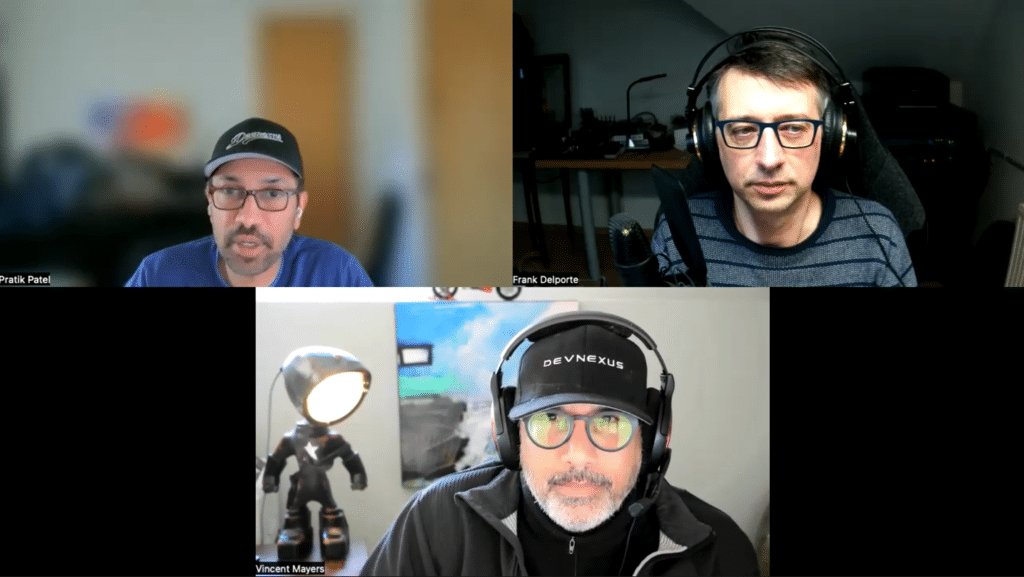
Today we travel back to the US to learn more about the Atlanta JUG, mainly because this week, they are organizing the DevNexus conference!
Let’s learn about the challenges of organizing both a Java User Group and an entire conference…
Podcast Apps
You can listen and subscribe to the Foojay Podcast on:
- Spotify
- Apple Podcasts
- And most others…
Guests
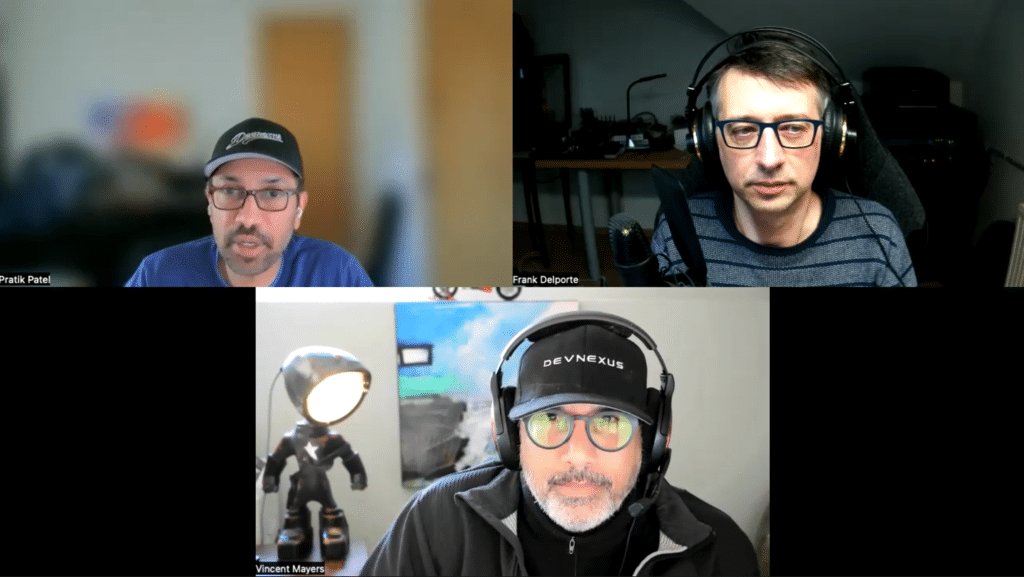
- Pratik Patel
- https://twitter.com/prpatel
- https://www.linkedin.com/in/prpatel/
- Lead Dev Rel at Azul
- Vincent Mayers
- https://twitter.com/vincentmayers
- https://www.linkedin.com/in/vincentmayers/
- Dev Community at Gradle
Podcast host
Links
- Atlanta JUG
- DevNexus
- 4-6th of April 2023, Atlanta US
- https://devnexus.org/
Content
- 00'00 Intro
- 00'36 Introduction of the guests
- 01'37 How the Atlanta JUG started
- NYJavaSIG: https://www.javasig.com/
- 03'17 Why the guests joined the Atlanta JUG and became organizers
- 04'39 Impact of Covid
- 05'39 Venue is a hotel or co-working space
- 06'34 Atlanta JUG is a US non-profit
- 10'22 Other people involved in the organization
- 12'27 Number of JUG visitors
- 14'04 Most remarkable sessions
- 16'35 Starting a JUG is “just do it”, a formal structure is not a requirement, and how to find speakers
- 20'53 About DevNexus, how it started, the many tracks,…
- 42'17 Who is visiting DevNexus and Atlanta JUG
- 52'16 Outro
Transcript
Automatically generated from the audio, so it can contain errors in names and technical terms. Suggest a correction.
[0:00] Hello and welcome to this new edition of the Foojay podcast today we are traveling to the us where we visited the Atlanta jerk and the dev Nexus conference podcast all your news about OpenJDK the Foojay podcast Java User Group World Tour already brought us to the UK US Dubai and Japan today we travel back to the US to learn more about the Atlanta jerk especially because this week they organized the deaf Nexus conference let’s learn about the challenges of organizing both a Java user group and a full conference hello my name is pratik Patel I am a Java Champion based out of Atlanta and I am currently the president of the Atlanta Java user group and I am also the conference co-chair along with Vincent for the dev Nexus conference and I also work at Azul systems leading the developer Advocate team all right everybody my name is Vincent Myers I’m also a Java Champion based out of Atlanta not from Atlanta based well I don’t sound like I’m from Atlanta I am living in Atlanta and I have been for 20 years so I do I coach the dev Nexus conference the critique I am the treasurer of the Atlanta Java user group
[1:20] And I am the director of community for Gradle and I’m Frank I work as a technical writer for Azul and also make these podcasts for Foojay because I’m very interested in how it is to organize a Java user group and what is involved and why people actually do this let’s go back in history the Atlanta joke how long does it already exist the Atlanta jug is actually one of the oldest Java user groups in the world Vincent do you remember who started the jug it wasn’t worth Sutter birth center here’s a red hat now ran The Jug for a very long time and then after that there was someone else and then after that it was me there’s always a board of course but Vince you remember who it was that started the jug back early 2000s I never met that person like I first got into that probably in 2004 and I think bird had run it for about I want to say six years the guy that kicked it off though I don’t I don’t even know who I was but it’s safe to say that the jug has been going for at least 25 years probably 23 26 or 27. yeah at least 25 years almost as old as Java itself yeah that’s right which came first the language or
[2:34] The Jug I think the oldest job a user group in the US at least is the New York Java Sig run by our friend Frank Greco I think it predates the Atlanta jug by one or two years I think he started his jug in 1996 or so there you go so an important distinction we are actually Java users not s groups not Java user groups and Java users groups came out of six special interest groups Community Lane here Community Lane going back in time yeah so you were not there from the start but why did you get involved in the organization of the Jack well I was at the time I was a I was a 10 core recruiter I’m not a software engineer but I play on TV as I like to say I’m actually not a child developer I have the green pottery it’s a long story so I’m not going to hear but I was a tech recruiter I had my own company in Atlanta and I started and I involved with the drug as a sponsor in 2004 because I thought it’d be a great way to learn more about the ecosystem and the community and I’ve in a nutshell I just stayed involved ever since and for you pratik oh wow that’s a great question so I had actually just
[3:51] Moved back to the US from London in early of 2005. as I was working as a Java developer an architect here I wanted to start getting involved a little bit in the community here and I remember I think I did my first presentation at the Atlanta jug I became a member immediately upon moving here in 2005 but I think I did my first presentation sometime in 2007 at the Atlanta Java user group and it was a presentation on groovy and Grails believe it or not so you probably remember that Frank I think some people still use that technology but back then it was kind of gaining traction because of all that movement around the Ruby on Rails community so groovy and rails was starting to get some lift and some developer mind share at the time right with all the Jacks had a lot of issues with kovit and actually everyone stopped or went online how did you continue your sessions or did you have to stop so I’ve been involved since 2004 we have not missed a single session in the entire time that I that I’ve been involved yes we did go online there was this kind of a initial excitement of well we were
[5:03] Forced to go online of course and I was listening oh we can do this on his own of course that wore off really quickly but we continued to do it and it worked out well it was a way to keep continuity I’m sure we’ll get into it running a jug is all about consistency but yes we went online and kept going all the way through pandemic years and now we’re back in person and that wins would be because I heard from the Denver Jack for instance they have a bit an issue of finding venues where they’re welcome with a big group because of yes still covet being around and extra safety measures that need to be taken that went smooth for you to restart the way that the Atlanta jug has always done the meetings as far as I remember is that we always book our meetings not at a company’s office but at like you know co-working space or you know Hotel meeting room or something like that so we didn’t have some of the obstacles that some other Java user groups did where you know they would meet at like this company’s office right every month and then that company shut down their office and now there are
[6:12] Additional barriers and blah blah blah to opening back up so we never had that problem so when we were starting to decide on having in-person meetings again you know kind of as the pandemic wore on we just booked our normal venue with the smaller room and so yeah we just started to go from there basically right how do you do this because most of the Jacks they’re totally free they have no budget so they really rely on these companies who offer this space if you say yeah we rent a space at a hotel I can’t imagine that there’s some budget needed there even from the early days it’s The Jug has had sponsors when I started to get involved in my company we were like one of three sponsors the first being you know primarily one being JBoss because Burr Sutter worked for JBoss and of course JBoss was a big part of the ecosystem yeah so there was JBoss there was oh I could I should go to the way back machine and look there was another consulting company and there was Antonio group my company so you know there was so there were annual sponsorship Jews at the time and
[7:23] So the jug has always had a little bit of money every year and use that to pay for the space so one of the goals from the beginning with the Atlanta jug has always been a long-term sustainability and Independence we got people from the community like when Vincent was working at a recruitment company they would sponsor with money and other people would sponsor so that we were able to have the ability to be 100 independent and not necessarily tied to a specific company and you know whatever was going on there you know someone who was our champion at that company would leave and then all of a sudden we have to figure stuff out again right so Vince actually does a presentation called The Jug business in that presentation he talks about how yeah you can run it as just kind of like you know how you would just Loosely run some kind of Meetup like this but you know if you want to be more serious about it and have the ability to have more Independence and to do more than running it like a business is probably probably a good idea so for example we many years ago set up the Atlanta Java user group as a U.S
[8:36] Non-profit specifically a 501c6 company which is known as a Professional Organization non-profit so that we would have you know the various tax benefits and the ability to say hey look we’re 100 non-profit we do this for the community and that’s why you know you should get involved either as a volunteer or speaker or as a sponsor or whatever this is actually the first check I’m talking to who has this complete formal structure that’s really great I can imagine there’s also a lot of extra effort that needs to be put in there so you need to find your sponsors you have this accountancy to be done absolutely there’s there’s definitely more work to it and there are some other drugs Vince do you know the other ones on top of your head who are also registered as a company I think Frank’s New York javasig for example is registered as a company and the Chicago jug actually is also registered as a non-profit in the state of Illinois if I remember correctly so we’re not the only ones in the Dublin jerk is also a registered company Frank you’re right it is more work and but it does
[9:42] Allow us to be you know consistent and the team mentioned this talk the overriding theme is about consistency you know intentional consistency and trust me consistency is hard it’s really hard especially when everyone’s a volunteer because things change in people’s lives and blah blah blah and circumstances change and it’s it’s super super hard to even oh you know what is a jug it’s a it’s a meaning once a month well you know a lot goes into that it doesn’t just happen by Magic and for it to happen consistently takes a lot more magic if you will and I can imagine that there are more people involved than both of you so you’re here now as the presenter of the Atlanta Jack but I guess that there is a whole team supporting you to organize these yeah yeah absolutely so we have a board and we have a fairly you know I think a fairly large board in terms of how you know most jugs are organized we have I’m trying to remember exactly how many people we have on the board because you know we have some people moving and out here there currently we have for example another Java Champion who’s on
[10:54] The board Burke huffnagel is a part of our organizing team and then there’s Glenn Renfro he works on open source spring but he works for VMware Laura Moore another local person Jay Stevenson and Roy Clarkson we’ve had a couple people cycle out recently but you know how it is that people kind of have time and don’t have time but we have a great board that helps us to put on a really good Java user group and of course to have Nexus and you know organizationally we there’s other things that because we are a registered non-profit we and of course now you know I’m sure we’ll get to the dev Nexus conference you know we run this event and there’s a lot goes into that you know we have to have a CPA and do our IRS reporting every year part of that is we need to have reporting on what the board does and how many hours we work every year for the drug as as volunteers and you know we have a board Charter we have you know regular board meetings you know once a quarter one of which is designated is the annual general meeting we take minutes here every month so yes there’s there’s so much that
[12:03] That has to happen if you want to you know if you want to do this at the I say scale not because we’re this super huge joke with all these people that show up every month because everyone’s still building into that but because we do these other things as well which does require scale so in order to do that successfully and consistently we have to have all these other organizational factors to what we do I’ve seen some big numbers on the number of speakers that you have for Dev Nexus that’s massive in the number of sessions but we’ll come to that but if you have a jug how many visitors do you have for The Jug in average before the pandemic we would average anywhere from 100 to 200 young members in attendance since the pandemic I think when we had venkat here and Josh long here in December and January with about 50 to 70 people at both those meetups so drugs are very much recovering you know from the pandemic and you know the all that stuff we’ve seen a definite uptick month over month since we started jug meetings back in when did we start Vince or something we started in person around
[13:15] The summer of last year yeah but even 50 70 people exists a lot for some jokes so yeah especially for Atlanta because Atlanta is geographically very spread out so unlike you know cities in Europe for example where people come to a city center to work and then they go home Atlanta is not really like that I like to think of Atlanta as having four or five different city centers where people go to work so it’s very geographically spread out and that’s part of the challenge in this you know after pandemic world is that people are much more working at home so it’s more difficult for people to consider leaving their house to drive 30 minutes or even an hour to go into a drug meeting so that’s where some of the challenge comes in you have so many sessions so many histories so is there one session that you can pick out which was the most remarkable either a very good session or a very bad session I can’t say to be honest I mean I actually wasn’t at this one but there was one I think sometime in the fall where can that person that we had to call an ambulance right were you there critique for that
[14:30] Session whether I was there yeah yeah so that was the worst one I think the best ones in my opinion is eventcat subramanium I think everybody knows who he is he comes and visits our jug every December right before Christmas so we always just book him like we haven’t booked out five years in advance right so we like just come every Christmas whenever that third Tuesday is those are the favorites one of the favorites of a year for our attendees and for me personally because having been cat there and having his energy and his positivity and of course there’s immense knowledge in the universe we work in is always a lot of fun and the format that we typically do that is we do a ask me anything type of thing where you know someone like me or one of the other Atlanta drug board members will moderate people ask questions like you know what do you think about Java 19 or you know this or that and those are for me those are the most fun ones where people are very interactive rather than just having a lecture style presentation there was one session we did
[15:37] With James Gosling they don’t know and he came oh God this may have been around 2008 sevens on there it’s about that maybe six I don’t know and we did an AMA with the with Gosling and it was at a movie theater a departure for our normal meeting space and you know AMA with gossing and then we all get to watch a movie but so I record one of the questions somebody asked was you know tell me about the last aha moment you had in technology they’re expecting James to talk about are the in when they conceived the Java in a group and called it oak tree or whatever whatever Earth it was oh yeah Oak back in the you know 1820s and he said oh that was there was a Fortran utility in 1964 that really got me going and interested and it was just super funny let me add one more thing we’ve been talking quite a bit about you know setting up a company and running it more formally and stuff like that but I wanted to make it very clear to the audience of this podcast that you don’t have to do that there doesn’t have to be that much ceremony as our friend venkat would say you don’t have to have
[16:57] That much organization I think is perfectly fine so for example if you work in a city and you work for a company that has a 10 or 20 or 30 percent office space that’s a great way to get started or to drive your jug initially right you don’t have to be formal you can ask your company to provide pizza or you can ask a couple of friends locally who work at a recruitment shop for example to provide some food for the Meetup and just get started right you know I think the important thing is that you create the community rather than having this big organization around it right yeah sure after a while you may say you know what this is going really well let’s create a proper company around this and let’s get formal sponsorships and stuff like that but especially if you live in a city which is you know small to medium-sized or even large size for that matter there’s nothing stopping you from just saying hey let’s just meet at my company’s office on Tuesday evening from five to seven we’ll get some speakers and stuff like that and you know the next question might be well how do I get speakers the obvious answer is just
[18:05] Reach out into your local jug Community or the friends that you have in your community Java Community locally and get them to present on something and then you can also reach out to people like us at the Atlanta jug we help our other drug organizer friends in the U.S to get speakers they’ll say hey we just saw that you had Josh long speak at your Meetup do you think he’d like to come down to Greensboro North Carolina we’re starting a new Java User Group there and we’ll say absolutely we’ll help you make that connection and if if he’s available he’ll come speak right so you can always reach out to your fellow junk organizers and I think Frank you probably know this there’s actually a mail list for drug leaders that you can sign up for once you’ve started a jug and you can get some support and help on all the different things that we’ve been talking about there you’re right that it doesn’t have to be so official I mean we just restarted the Belgian joke don’t calls and me and indeed we are just trying out we’ll see where we end up but indeed if you find a company who is willing to host you it’s definitely not not
[19:08] Difficult to find a speaker what we also learned is that keep an eye on conferences in the neighboring countries and people traveling to that conference or traveling back or most of the time is available for a job right and when Frank says country in the U.S he means neighboring state yes I’m from Europe yeah the community is very helpful and engaged so it could even be that you go to a conference website and you see someone who’s speaking that that’s you know attributed to be an expert in a in whatever tool framework language and because you know other languages run on the JVM other than Java it doesn’t have to be about childhood language it’s about Java the ecosystem right a lot of that is cloud native these days so there’s many many things other than just let’s talk about you know programming in Java and just you can reach out to these folks on LinkedIn or over Twitter they’re super helpful and if they you know you build a relationship you build a rapport if if if they can come they’ll come they could also recommend other people because you know these speakers all tend
[20:15] To know each other from having done speaking stuff for some years and everyone is very very helpful it’s one of the most to me engaging things about the Java Community is how eager to help other people people in the community are yeah fully agree this whole Java Community is so friendly and so open and when I was writing a book a few years ago I was reaching out to some people who are my heroes and they actually replied and they said oh yeah an interview no problem I’m just send me your questions so indeed a lot of these people are just so reachable and so open to help you and to assist you we mentioned devinex is already a few times so we definitely need to talk about it what is Steph Nexus a little conference something like that yeah so devdexes is now the largest Java event in the US probably North America it was started many many years ago I think Vincent this is probably or this year will be our 18th or 19th Edition in some form of this conference is that right yeah so 18th year the Atlanta job youth group has run something a quick issues that and so in 2004 was it was the first one
[21:28] 2004. I like my mats off I don’t know super Sutter wanted to run something and he it was a one day single Track event called Java Devcon and you know friends and family speaking I think it might might have been 50 people there I think it was like 50 bucks or 30 bucks to get to go just to cover the sandwiches or something that he probably made at home but every year it builds a little and a little and then Sun took it over in I believe 0.607 gross 708 and it became folded into the Suntec days Roadshow where they would go around with a big big semi truck of sun stuff and you know we would get James causing another Doris Chen and other people from Sun to come in and talk on Java and other speakers and then when sun got acquired by Oracle that was the first real dead Nexus that following year where we’re like well no more Suntec days but we still want to run something let’s do something now there’s a bigger audience and really that was the you know that was the first iteration of the name Dev Nexus and we ran it at a venue in Atlanta called the Cobb Galleria
[22:43] Or at state for a number of years I think there were maybe 400 people at the first one like it’s probably four tracks or something now it’s it’s a larger event you know our goal’s never been to have hey let’s have the biggest thing and have thousands of people although it’s kind of grown organically towards that our goals just always been to put it on just because because we should but to critiques point now it’s it’s the longest running Java conference in the US and you know Suntec days has come and gone Java one has come and gone or whatever Oracle did has come and gone so yeah it’s it’s the test of time I think 20 2020 we did it right before the pandemic in February we didn’t have a pandemic then or there was Rumblings of covered and we had about 2500 people at that one we did it virtually in 21. we did it in person in 2020 last year and 22 with about half a number at about 1300 and here we are in 2023. the conference really grew from the Atlanta jug so that was really the start and then the conference came out of that one yeah and like Vincent was saying there’s
[23:58] Been a couple different names over the years but I think it was probably seven years ago now seven or eight years ago Vince and I were talking about the event and we put together a goal of basically having the event get larger and larger over time because if you remember Frank Java one was also in play at the time and Java one would be in the fall and we’re like you know it would be really nice if we could have a great conference that would rival job one in size in the spring so we put together a plan to expand the number of tracks that we had I think when we did it the conference in 2017 I think we had five or six tracks and when we did the show for the pandemic in 2020 we had a whopping 15 tracks for the event so our goal was to have a big tent style of conference where we would have lots of different people in the Java ecosystem you know at the time Cloud was big and there were lots of other things so we’re happy to incorporate the things that developers are interested in at that given point in time so right now now a lot of it is around you know cloud and Java and devops and Java and then of
[25:14] Course we have tracks on like agile and practices and tools and stuff like that but the idea is that we have this massive umbrella event where anyone who works in the development specifically the Java development ecosystem whether you’re a project manager a software architect a developer you’re doing devops or you’re doing Cloud Ops or whatever a whole team could come to an event like this and they can get something out of it right they can get something and when we look at the presentations which are submitted for the conference one of the things that we look at from that specific point of view is we try to carry presentations where someone can go to a presentation and then the next day they can go to work and say you know what I saw this great presentation on this specific thing I’m gonna go try that because I think it’s really useful for me or my team or my organization and it’ll really help me personally from the career and I’ll help my company get value or whatever it may be right so we try to go things for things which are pragmatic in real world we still carry all the stuff that you
[26:22] Know all the shiny new toys as they say that developers are interested in right but maybe they’re not going to use today so we still carry all that stuff just so that we have a well-rounded program but our focus is very much on having things which people can use as soon as they’ve left the conference right whether it’s tomorrow a month from now or a year from now I think the biggest problem for your visitors is choosing which sessions they will follow that’s right you have to choose very carefully we do record the conference so that folks can watch some of the sessions that they see but just to give you an example we always have some of our presenters complain that they’re up against other people who have also amazing presentations so for example one of the time slots that we have for this year’s event there’s like four Java Champions presenting in the same time slot so for example venkat is doing a presentation on Java 20. Daniel hinojosa who’s a Java Champion out of Albuquerque New Mexico is talking about machine learning with Kafka and tensorflow and then Bert who you know from NL mastering the
[27:36] Linux command line and then of course there’s Josh long talking about spring boot 3. oh and there’s eight other presentations in that sense at the same time so you have to choose carefully is the good way to put it but I guess that if some room is completely full people have to flow over to another room we have to be at the same thing we have in Belgium fosdem with a lot of different rooms it’s in a university so the rooms are not that big and actually you end up in another room because the one that you wanted to visit was full and you actually learned something new because you end up in a room that you were not expecting and it’s a new topic what you just said is it is the reason why people should go to a Java user group or by extension a conference like this so you know for example you may want to go to Josh Long’s presentation on Spring boot three because your company might be quite great into that water three inch I could learn something but the room’s full and then you end up in this presentation on Kafka okay and this is interesting to you know you’re not using it not part of your stack or
[28:42] Whatever or you know conversely you go to the Jug meeting that month and there’s a presentation on Kafka some months later you know you may be in an interview for a new job and Kafka is not part of the stack or anything and the interviewer says to you do you know anything about Kafka we’re thinking about you know using this in our you know in our Dev environment and you say well well no I’ve never used it but I did go through a presentation at conference this or chug that where the presenter was talking about streaming and how this can be used to do X Y and Z and it seemed really interesting and just the fact that you have a perspective on it because you’d seen a presentation and maybe even talk to the presenter after could make the difference between you getting hired and the other candidate who might have even have more skills in the particular stack that you know that you’re interviewing for but you have a perspective based on having seen someone in person and had some discussions after with a someone else who was there again that could make
[29:52] The difference between you getting hard for that role yeah that’s something I learned that devops in September or was it October last year is people coming to me at the boot of azul that was at that time telling you I’m doing Java development for so many years and it’s only now that I learned about streams and because at our company we are stuck at Java 8 or whatever indeed coming to conference and visiting a session that you didn’t plan or can open so many eyes and give you so many new insights that’s really really important the insights thing is important all right so you go to this talk on spring or Kafka or anything else but the conversations that happened over coffee and lunch or even with the person next to you about you know your real world use case or you know that person may not have solved that themselves at their company or in the past but they have a perspective on it which you hadn’t thought of just that conversation could change your life because you could have this real aha moment from some random conversation about something that helps you at work and that in and of itself could be
[31:03] More valuable than any of the sessions on the new features of X Y and Z that you attended yeah and I think to build upon that one of the things that I suggest to people who are junior mid-level devs or even senior devs for that matter Frank is I said look you can go to this session on what’s the latest thing in Java 20 Europe’s a experienced Java developer and I’m sure you get some value out of it right but have you thought about going to something that might be a little bit different right so for example at this year’s Dev Texas Aaron Schnabel from Red Hat is giving a presentation on Beyond rest and crud integration patterns in microservices right it’s like I know from the surface it’s like well I don’t know if that’s something I’ll really get some value out of but if you go to something like that you the probability that you’ll learn something new or even if you don’t have something that you can use at work you’ll learn to think differently it will help you in approaching any kind of system You’re Building or even low level code or something like that so it’s a lot of this is around expanding the way
[32:11] That you think as a software developer because you know how it is as a software Dev you kind of okay I’m running Java code and this is how we write Java code and this is how we’ve always written Java code but what if I could build a system differently right what can I do to help myself and my team and my company build something in a new and modern way and learn how to do that from an expert in the room so yeah and just you bringing them up bringing that up at a stand-up or something or a team meeting because your company’s thinking of trying something new you know the boss goes well you know that’s a great idea okay we’ll look into it and then now you’re running that project and you’re like really and all of a sudden you’re you’re now after six months on the road to becoming the expert at that org in whatever that is do you have any idea how many speakers you have at death Nexus I started counting the page but I gave up so at tablet access this year there’ll be a total of including Workshop speakers and some presentations which have two speakers there’ll be a 139 total speakers across 120
[33:16] Sessions and six workshops wow so there’s a 120 sessions 12 tracks over two days so yes 120 sessions over two days and then a full Workshop date so it’s a big event I have to pick one I saw you tweet about the Keynotes and I want to highlight Sean Phillips yes I interviewed him for an article on Foojay about his project and that’s the project he will talk about the visualization of brain computer interfaces he does it with Java vix that’s one of my big gloves so that’s why I wanted to interview him it’s really pity that I cannot join your conference I really want to see him talk about this he’s such a good speaker we’re really looking forward to this presentation when we first started talking to him about this you know obviously after we got the jokes of like you know when can I plug into the Matrix right when is when are you going to make this happen for us aside from those jokes we really like the work that he was doing in this area so you know he’s obviously a expert in because he works doing this stuff working with Scientists who plug your brain into a computer type of thing so
[34:26] We’re super excited about carrying something for our audience that would you know but it’s one of those things it’s at the Forefront of Technology it seems like you know a distant Star Trek type of thing but it may actually be here in the next you know decade or so it’s a super interesting for him to talk about how can humans directly plug into a computer or how can a computer read your mind because you know I would love to be able to not have to type anymore and just think words and they just show up on a screen you know so the lazy programmer becoming even more lazy yeah so you just think it and it happens you don’t even have to type anymore right can you think your tests can you can you think yourself at your way out of freaky tests maybe one day Sean’s always been great at this so we had him as a at a keynote I think it was 2017 keeping honest critique yeah with Diane Davis and they were both working at a NASA contractor at the time and I can’t remember the exact name of the session but they’re basically visualizing you know flight paths for
[35:34] Orbital trajectories and you know he was able to show how they did this using jfx and is incredible and I know that he has this Matrix like this place he has those displays in his lapa so that’s right yeah now for that presentation that they did back in 2017 it was around coming up for trajectories for mid-orbit between the Earth and the moon for preparation for permanent lunar base right so as software developers we’re all some level some degree of nerd right whether it’s space nerd or something else and it was fascinating that these they’re actually people working on these big big problems like how do we establish a colony on the moon right what do we need to get there yeah one of the things we need is we need this thing running mid orbit between the Earth and the moon as a halfway station and so they were you know they were using Java effects to map out these trajectories and Diane would come up with the equations for how do we put a spacecraft in there that would be geosynchronous and blah blah blah and all this type of stuff and it was fascinating that you know that we know
[36:49] People that are working on you know stuff like this because you know a lot of java devs you’re just working on something that you is not as exciting as that and again that these people are so reachable and open to talk about their work and share with everyone what they do I know that Sean created a few Java libraries and Java vix libraries which are just free open they live on GitHub and anyone who wants to build something similar can do that with libraries he created believe it or not you reach out in with a question he’ll answer it’s easy to find except at the bar on Friday night that’s the story so I selected my favorite session okay can you select one of that 120 wow that that’s really difficult so Vince and I are both on the cfp team so we read you know eight or nine hundred different cfp entries oh gosh I I’m gonna have to think for a second do you actually have time during the conference to join sessions as the organizer that’s a great question I usually am able to sneak in one a day right so but you know I’ll go back and watch the videos later but I think some of the ones that
[38:00] I’m super interested in especially in light of this recent interest in like AI with chat gbt and stuff like that Frank Greco is doing one around AI called patterns predictions and prescriptions which is about basically using machine learning in Java to do those three things patterns predictions and prescriptions and then the other one that I’m super interested in is the one by Aaron which I mentioned before which is beyond rust and crud integration practices and microservices and there’s a little bit of a little bit of an inside job because I was speaking to her and she was like what should I do a presentation on I said what I would really love to see is a presentation on how you weave together microservices but not using just HTTP standard rest calls using something like Apache camel to make it much more fluid and you know a little bit less brittle and she was like I think that’s a great idea so we talked about it some more and she came up with this great idea and I think that’s something that like I would personally use as a software developer I think a lot of people in the audience would love
[39:08] To see alternatives to just doing HTTP over rest so the session is created for you so you have to be there yeah exactly so I was able to find a victim I mean a volunteer to be connected for you yeah and Vincent do you have a one that you have selected well there’s a tuna I’m going to butcher her name oh yes Rosie is going to be talking on observing Minecraft so you know it gets me behind the you know the interface of my the only way I really interact with technology which is games they’re going to look at how into that kind of into your monitoring server health and the learning and issues on real time as you know they do it for Minecraft which is obviously not a small system when you think about what happens behind the scenes at scale for something like a game people think games are pretty lightweight things that they are not especially when it comes to something the size of Minecraft that’d be really interesting but I think those lessons apply to anything that you’re going to do that’s you know highly scalable and highly secure so that should be a good one do you have
[40:13] Time to go to sessions no and people sometimes say hey man you’re having fun I’m like I am not having fun at this conference I do not have fun at the conference I’m enjoying myself right don’t get me wrong I love doing it and I’m enjoying myself but it’s not a fun thing for me too much going on but actually I never organized something so big but isn’t it the moment that the doors open when the event actually starts there’s no way back at that moment so isn’t that a flow forward no there’s no way back from this six months before although so you know inside trick if if you want to actually even talk to me at this event don’t don’t do it until after registration on the second day on the main on the first main day of the conference so between 7am and say 10 a.m don’t even look at me it’s the most stressed that I’m gonna be because everybody wants something on you know everything anywhere everywhere all at once is it’s what that period is after that initial flow when everyone’s come through the door and got their badge and shirt and what have you for the most part it’s you know it’s
[41:24] It’s kind of pretty much on autopilot till we pack it up although there’s always things to do but yeah there’s no way back from this six months before because we have to sign things it is quite a bit of work leading up to the conference we typically don’t sleep much during the event I think last year and every year I’ll go to bed at maybe one and get up at five a.m one a.m to 5 a.m is sleep time and then you’re running on pure adrenaline for like three or four days so but we love doing it so that’s why we keep doing it I really hope that you have at least five minutes of time to grab a cup of coffee and take a look at the event from the site and see how everyone is enjoying them and going from station to session that’s why we do a video every year we should do it again this year critique it’s because afterwards and go oh yeah that was fun I guess Dev Nexus is sold out already no more tickets there no so people can still come to the Atlanta Check afterwards what is the mix of audience and who is coming to your jokes is it a male 40s white as most of these tag events Frank that’s a really
[42:35] Good question so the question is what is the demographic for the dev Nexus conference and so Vince and I both go to various different Java focused events around the world right whether it’s devbox Belgium Java Barcelona or JBC and conf et cetera right and I think one of the things that our speakers finds pleasantly surprising about devnex’s is that our audience is actually quite diverse compared to other conferences and some of that is just organically and some of that is actually by efforts by our team so for example we partner with a text of color Atlanta and women who code Atlanta to make sure that they’re aware of the event we also have a large number of scholarships that we give both those organizations so that those folks can come and I think the other organic part is that Atlanta is a city is also very diverse so when you’re walking out onto the Expo floor at lunchtime or during a break you’ll notice that compared to other Java events there are a lot more women in the audience right there’s a lot more persons of color whether they’re they’re black or whether they’re South Asian or
[43:55] Whether they’re you know Chinese Americans or whatever you’ll notice that there’s actually quite a bit of diversity here compared to other events it’s something that we’re always working on improving and like I was saying it does it didn’t just happen by accident it’s something that we’ve worked on over the years right similarly if you look at the speaker lineup you’ll notice that there are a fair number of not 40 year old men as speakers and you know a lot of that is Outreach that we do to specifically get those folks in different communities to submit their ideas for the conference so it’s a mixture of both but a lot of it is the work that Vincent myself and the rest of the team puts into the conference in terms of having a diverse attendee and speaker base yes I remember a tweet from I don’t know what year it was but one of the preceding years where one of the ladies that was there so a paraphrase it’s terribly but you said this is something you don’t normally see at a Tech conference a line outside the women’s bathrooms [Laughter]
[45:05] You know demo breakdown isn’t as high as we would like it to be it’s Tech right but we do what we can to encourage it with partnering with local orgs or every year we’ve run a women in technology breakfast at the event on the this year it’s on the Thursday the second day of the main conference and we’ll I can’t I don’t know what the lineup is for this year because I’m not organizing one of the female members is organizing it this year great even better but you know last year we had you know Heather vanco who runs the JCP interview Elena Percival who’s the CEO and founder of women who code worldwide so and you know we’re very fortunate to have her her come to the events and join us and participate and this is not just for women we want everyone to come to it but it’s the room is full and it’s you know I think that’s super encouraging for 10 conferences to see that and it’s a small room it’s a room that seats 400 people so there’s there’s a lot of women at the event I think I don’t have the specific
[46:17] Numbers for this year or the last year off top my head but I know that in 2020 that we had I think somewhere between 35 to 40 percent women in attendance right don’t quote me on that because I’m not 100 certain but it was at least one third of the audience was women so that’s something that we really like to see that was also part of the message of the Japan jug they have a separate woman joke but they really want to join they want to have one Community which is friendly for everyone where everyone can join and do you also see everyone returning to your jerks now past kovit is everyone coming back from behind the computer from the home desk from working from home we’re seeing approximately one-third to one half of pre-covet attendance at the Java user group but I think the encouraging thing for us is that the attendance has slowly but surely been increasing every month people are starting to leave their home computers leave their house and come back out I think that with the recent news of the widespread layoffs in technology I’m hoping that people will start to understand again that it’s
[47:35] Important for them to go to these local Java User Group meanings it’s important for them to number one learn something new or even if they know it just see a different perspective on something that they already know as well as start doing that networking again right because I know in Europe things are different in terms of job security and stuff like that but at least in the US we don’t have as much job security we never did compare to Europe right so I’m hoping that people get this message that they need to start re-engaging with their local Tech Community whether it’s the local Java user group or the Local web Meetup or the local machine learning Meetup or whatever it may be if there’s one thing from this podcast that I would like to let people know is that now is a good time to go out and start re-engaging with your local Tech Community right get you don’t have to be involved you just show up at a meeting you know make some friends meet some new old friends make some new friends start rebuilding that Network because Frank as you know the one thing in technology that is always
[48:42] Constant is that technology is changing so what you know today is not necessarily what you will need to know two or five years from now so you always have to stay on top of things so that you’re always employable and you have a great job that you like and actually everyone gets his keynote is all about this at that point yeah it’s important that people get out of the house so in the past people would be at work and they would leave work and come to the Java user group meeting and see a session and have pizza with us whatever and then go home now for the most part with the you know remote work hybrid work whatever people will have to leave home to come to the Java user group at that worst time of day for traffic and so many things can get in the way of that you know so with the best intentions in the world you’re like well I want to go to the meeting tonight and you know it’s at seven o’clock so I need to you know leave my house at six or six thirty whatever but guess what happens a work core runs a little low because that tends to happen when people are distributed
[49:50] You you’ve got to get this last email out of the door tonight you know if you have kids the kids are going crazy then it’s burning the dog gets out it starts raining or you’re just like oh I’m tired now I finished a long day I’m not gonna go that’s what’s happening so you know it isn’t this flow of work it’s a joke to home now it’s like home jug home and that’s one of the reasons why this attendance is down from what it was but to pratik’s point this is a perfect time to re-engage in your community to rekindle you know a sense of why you even do this because you don’t see people that much in person anymore you’re doing this which is fine for the mechanics of a day job you know particularly both worked remote for many years so we get this but it but we also get out a lot because we go to events it’s part of our job but if that’s not part of your job it’s very important that you see other people in person what I learned from the previous talks I had with Jack leaders is it’s not only the talk it’s really the event which is the whole combination of learning
[50:55] Something new learning something you didn’t expect maybe and definitely talk to other people even if you have a job you’re right in Europe we’re pretty sure about our job but even here there’s there’s a war on Talent here the companies are looking for people we invite some people from overseas to come help us but indeed even if you have a job you can always learn you can meet new people not maybe for a new job right now but maybe later so really mixing within the communities is really important yeah and I think you hit upon something very interesting there my favorite track at almost any conference is the hallway track right it’s yes I love going to see some great presentations and learn something new but the hallway track where you have those discussions on hey I’m using this specific library to do this or it could be something even more expensive it’s like hey I’m trying to learn this new thing I saw your presentation or just meeting a group of people who are tackling the same bug in Maven or whatever right that’s that’s where the real value of a lot of these events is
[52:07] Right it’s the hallway track where you can have those informal one-on-one or one to five you know three to five people discussion that really makes a difference for me thanks for joining this recording we do this a little a few weeks before death Nexus because I didn’t want to interfere with your schedule just right before the conference I hope you had a good start of the conference and you can really enjoy those few very busy days and at least pick a few of these these speakers and these slots thank you also listeners keep an eye on Foojay for future articles about development and everything related to the Java world and next month we continue this virtual world tour in another country we’ll see which one JDK
Found a mistake, or something to add? Edit this page on GitHub

Frank Delporte
Frank Delporte is a Java Champion, Java Developer, Senior Technical Writer at Azul, Blogger, Author of "Java Programming for Raspberry Pi - A Hands-On Guide to Electronics and IoT Projects", and Open-Source Contributor for Pi4J, Lottie4J, Sheetmusic4J, …