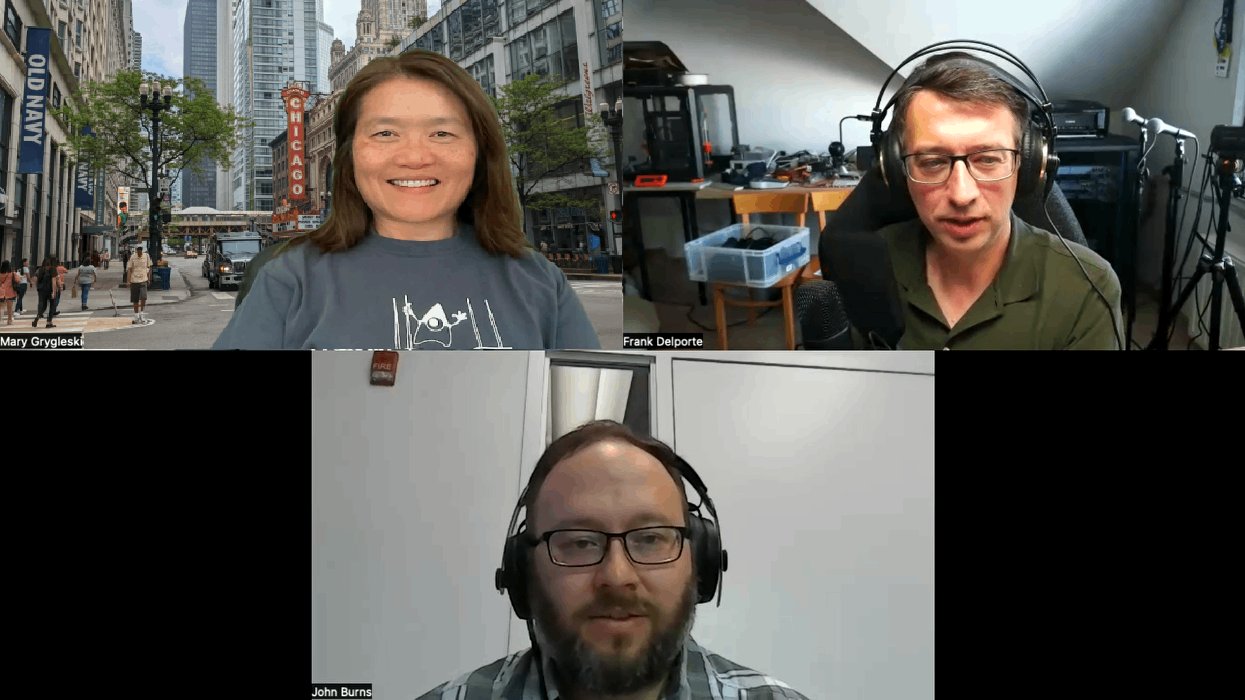
Foojay Podcast #27: Chicago JUG and KUG

 1 min read
4,263 views
1 min read
4,263 viewsSince December last year, the Foojay podcast virtually visited a Java User Group monthly.
This journey has already brought us to many places around the world.
And this time, we are in Chicago to learn from the Java and Kotlin user groups.
Podcast Apps
You can listen and subscribe to the Foojay Podcast on:
- Spotify
- Apple Podcasts
- And most others…
Guests
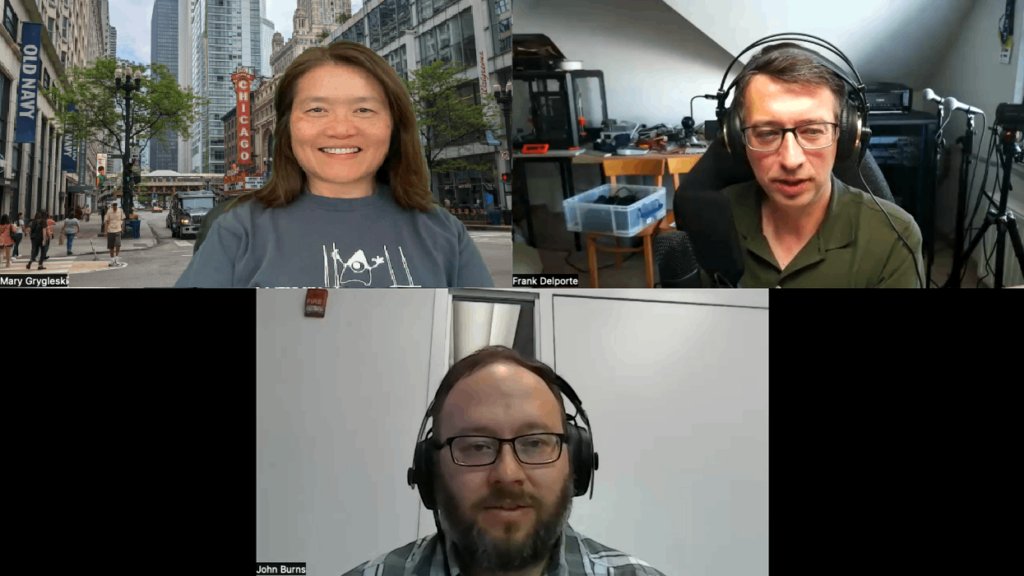
Mary Grygleski
John Burns
Podcast
Host: Frank Delporte
Links
Chicago JUG
- https://twitter.com/CJUG
- https://foojay.social/@ChicagoJUG
- https://www.youtube.com/@ChicagoJavaUsersGroup
- https://www.meetup.com/chicagojug
- https://discord.gg/U25g437
Chicago Kotlin
- https://twitter.com/ChicagoKotlin
- https://foojay.social/@ChicagoKUG
- https://www.meetup.com/chicago-kotlin/
- https://www.youtube.com/channel/UCWCHNOYemampfWXMUdQ95Sw
- https://www.youtube.com/playlist?list=PLb1tSwQ0ReIFFJbVpbNGIvmELaucyBTaL
A gift from DataStax
DataStax Vector DB and Search (no credit card and $25 monthly complimentary usage for up to a year): https://bit.ly/3L1Dkgi
Content
00:00 Intro and introduction of the guests
02:08 How Mary and John got into Java, Kotlin and user groups
06:55 History of the Chicago JUG
08:43 How Chicago switched from dotnet to Java in 2010’s
09:09 How Chicago JUG and KUG cooperate
13:04 Size of the communities
13:55 Impact of Covid and working-from-home
18:20 About streaming the event versus in-person
19:47 How to attract new visitors
23:00 Personal benefit of being part of a community
27:39 Speaking at conferences around the world
31:41 Most remarkable sessions
38:25 Outro
Transcript
Automatically generated from the audio, so it can contain errors in names and technical terms. Suggest a correction.
[0:00] Hello and welcome to this new edition of the Foojay podcast we’re starting season 3 of this podcast in Chicago podcast all your news about OpenJDK since December last year I virtually visited a Java User Group every month this journey has already brought me to many places around the world and this time I’m in Chicago to learn from the Java and kotlin user groups so my name is Mary quickleski I’m the president of the Chicago Java usage group I think I would call myself more like a main organizer now and anyway but so I am you know by day I’m a developer Advocate I’m currently at data Stacks a company that does mostly gen AI now but with their Cassandra database and Vector database all those things and so but my background I’ve been mostly in like event driven streaming things like that so yeah so by night too I’m a active Tech Community organizer currently with Java users group and also a couple other users group too that are owned by IBM yeah and still and so yeah that that’s kind of a nutshell about who I am hi I’m John Burns I am the one of the organizers of the Chicago kotlin
[1:14] User Group and by day I work at GrubHub where I’m a platform engineer so I work on the service platform not so much the infrastructure side more on the actual service runtime microservices architecture stuff so we are mostly JVM shop and we have a lot of tooling and everything around the Java ecosystem to make developers more productive in the in that space with their microservices so I kind of own all that tooling at night I organize the Chicago hotline user group with my other co-organizer Amanda and I also speak at some conferences that’s me and I’m Frank Laporte I’m a technical writer at Azul involved in a few open source projects and also in the Belgium Jack since it restarted last year thanks for joining Murray and John can you shortly introduce yourself and especially in how you got involved in Java in kotlin because yeah this is the friends of OpenJDK podcasts so we should have at least a bit of java can you tell me how you got involved in Java I actually was an engineer too for a number of years and I started actually off with CN Unix in the 90s so and then in about 2000 that turn of the century
[2:36] When Java was born and I was still doing C but that was the chance to start working on Java so I welcome it at that time and it’s like 2000 and I was with cybase so I worked actually on the J2 at the time was J2 ee server a team too that’s that’s why it was and that’s how I started working with Java and then I soon very soon too like 2004 I moved to Chicago and then worked on for a number of companies especially in Chicago a lot of applications environments so that’s really nice I started working with more product and then Venture into application to really use the product and versus designing it and implementing so I’ve been engineering and but the thing is though in like 2010s and I started to feel a little edgy felt like something missing I wanted to do more and then there was a chance also the timing too in my life I can start to go to more you know meetups and I started going and I really actually really liked it I didn’t even know the fact is you know going to meet up since especially Java uses group you know first and foremost because I was working with Java so I started going to jog
[3:43] In Chicago and it’s so friendly and just I love the community it’s just so you know welcoming so very encouraging so that’s when I started going and then eventually because I was going to almost every single Meetup at the time was Freddie gimme who was the president and with Bob and so they were like oh why don’t you come help us and so that was 2015 and start since I started helping I just get kind of you know more and more kind of sucked in you know this whole thing but I really enjoy it and I realized that something that felt almost seems like okay it’s my calling I really enjoy working with people and the community so yeah so that’s also in you know kind of a quick summary of how I got involved so yeah also how you got involved into the Jack that’s great John thanks for bringing some kotlin into the podcast because we didn’t have a lot of kotlin yet can you share how you got into Java and kotlin yeah so I have done a lot of different things in my career I started doing kind of some Java and.net c-sharp.net and I’ve done a lot of JavaScript single page app stuff as well but
[4:52] As my career progressed I pretty much specialized in Java and specifically working on tooling for other developers I’ve always worked at companies that are not what you might consider pure tech companies where we’re selling software product I’ve always worked at companies where we actually have our line of business and the tech is supporting that and so I’ve always kind of fallen into a niche of I build the software that the rest of the organization uses to build the software that actually runs the business and since I had some exposure to C sharp and things like that I did have some understanding that Java was maybe missing some features right in those Java 7 and eight days it wasn’t quite modern and so when kotlin came around I took a look at it and I immediately saw some stuff in it that I really wanted and I was sick of you know generating Setters and Getters all the time and things like that and so that really spoke to me and so I kind of followed kotlin’s development through its beta phase kind of dabbled with it here and there and then the Chicago continent
[5:57] User Group started in early 2017 and so I said hey I want to learn more about this I’ll go show up there and see what happens and I did and so pretty quickly I also got roped into helping out and eventually the original person who started it kind of had to step away and so kind of pick up the reins our user group is a lot of JVM based kotlin but also other stuff and so we can get into that as you go but I mean so it’s it might seem to some people that kotlin is this thing that’s not Java but really A lot of the time it really is just Java it’s just a little bit of syntactic sugar but we’re still on the JVM and we’re still using the same libraries and Frameworks yeah I have to be honest my kotlin knowledge is too limited so it’s time to dive in for me too but yeah it’s running on the chain on the same gvm and that’s that’s the most important thing that’s why we’re all friends of the same JDK you said that the kotlin use group started in 2000s and the Java user group is older I guess so okay so that’s true you bring up a brought up an interesting question
[7:09] I was like looking at right so the current I’d say generation although people said I’m like the new generation but let’s say coping going back to Freddy and he picked up this slack right and so that was like 2013 I’d say so about 10 years the generation but I wanted to bring that up because it first started when Java came out and Oracle actually first started the Java users group in Chicago it was run by sales people I believe and so thing is though it didn’t last too long unfortunately and then somebody else too in between like picked it up too and that also unfortunately didn’t go for too long and Freddie actually when he mentioned about it was he came back he thought oh he was he’s as we know Freddie from Seattle jugged now so he’s kind of very enthusiastic all the time so he restarted the Chicago jug he said initially too there were only five people coming five or ten people but as such right Fred is very passionate person So eventually too people who started coming back and also I think in 2013-14 there were a lot of new newer Frameworks came out and spring
[8:19] Was getting really popular too so I think they were able to attract a lot of people then and so since then and then of course like Freddie moved to Seattle and then I was helping out so much so I now became the main person since I think 2018 like around covet time actually right before coffee I became the main organizer but yeah so that’s that’s how it kind of yeah that’s an interesting context because from my point of view I do see those like early 2010s as a time in Chicago when like the.net ecosystem was very popular here and at that time is when the switchover was kind of happening where Dot and that was kind of fading away becoming more Legacy and Java was really becoming a lot more popular yeah so right exactly yeah that’s about alliance with the Resurgence of The Jug exactly yeah so you have two different groups you have the Java group you have the kotlin group ordered really two different things because Mary you said yeah we have to invite John to this podcast so you know each other definitely yeah and I I’ve spoken at Jack about kotlin too so but I think I can answer that
[9:29] Because it’s kind of on us as the smaller group is why do we exist right so when the College news group was started like I mentioned kotlin was still pretty new in 2017 remember this is before Google kind of announced that they’d be using it on Android and everything like that so people came kind of from all over who were interested in kotlin not just necessarily kind of Enterprise industry Java developers it was people from education people who were like into Haskell and they wanted to see what they could do with functional programming in kotlin and there was web developers who were interested in using it for web development because kotlin can also compile to JavaScript and so there’s kind of like a diverse array of people who are interested in kotlin at first and so that Community kind of formed around that we still have that today so whenever we do talks and things like that are specifically around JVM kotlin we do try to combo with sea jug and do combined events and we work closely together but then a lot of times we have other stuff that’s just not really about the JVM at all you know
[10:33] In those early days also it was a lot of like hack nights and workshops because we’re all trying to learn right it wasn’t there weren’t as many people out there giving talks on kotlin at that time there were a few and we got them but mostly it was just like let’s show up and like show everyone what problem you’re wrestling with right now and let’s figure it out together which is kind of like a different vibe from a more established user group but now we do kind of have that more established field where we have top speakers coming in and speaking about known things and then we just have the kind of social part after but so I think that there’s a lot of overall out but it’s not a perfect circle it’s a it’s a Venn diagram but that’s why we kind of want to keep our identity separate we don’t want to alienate those people who are not interested at all in like regular JVM development I think that’s that’s what John put it very nicely too and then from cjac’s point of view I think we were getting so big to I do have to say it’s hard to address every single aspects of java and so I think you
[11:29] Know obviously kotlin is to me right I always look at it like we’re cousins kind of if you look at a family and were related and though not exactly the same but from the same family so it’s nice too and John’s been always so friendly and actually he’s really big help too and I would go a bit more into you know the covert time and just all these things and I mean having John around is really a nice kind of you know you have your cousin there helping us really nice you know helping the Java use this group and of course you know we each have different focus and different history and everything so but I think you know it’s always nice to have like multiple groups or multiple people doing something like this and I think you know it’s like what does it call you the sum is greater than its parts are something right so it’s it’s you know never never hurts I think to have like combination and that’s why I said when Frankie asked me to come to this podcast I say well let’s have John 2 and just makes it more flavorful let’s hope you know this podcast recording is you know the content for
[12:29] Folks are more you know more than just Java JVM and we have kotlin as well so yeah yeah like they say one plus one is three in this case yeah yeah and that’s something we’ve seen in the evolution of java then if you look at Scotland versus Java like you mentioned you were sick of the catering setters now we have the records in Java so I guess one and the other Inspire each other and that’s I think yeah probably also in your jokes and in your user groups that you’re inspiring each other with the type of events that you organize yeah how big is the is the user group CJ currently we have like registered it’s like 3 300 something I didn’t look the latest so almost 3 400. I was kind of really impressed too although I do have to also comment that you know not everybody is active and yeah so and then I also see people leaving but also at the same time people joining so I think it looks like more people join than leaving which is good so yeah so that’s the size we’re in right now yeah so Carl cotton is a group on meetup.com has 938 members I just looked it up but yeah realistically
[13:41] What we get on a well pretty covid and we can talk about what happened with covet but pre-covered we were getting usually around 30 or 40 people to a meet up and it’s much less now post covet yeah it’s mentioned I think in every jerk podcast is it had a big impact all the real life events stopped but it’s much harder now to get people from their home office to the Jack or to the user group is that the same feeling you have with your organization yes save for sea Jack right it’s I think that’s what we are experiencing right now and it was probably last year 2022 when things started reopening up and you know all the restrictions from the government started relaxing so that’s when we started running in-person meetups and we tried a couple times and the attendance wasn’t very good you know every time I think we had maybe four five in persons and I’d say it was roughly you know like I said with 3400 you know not all active members we had roughly maybe in the beginning was like 20 people coming like 2010 between 10 and 20. so and the nice thing seems to be this year and just last week we did a meet-up and that
[15:01] Was 85 sign up but so we got about 25 who came and then still there were people joining us from more on our live stream too and partly it’s because too is that we have attracted folks from other countries to join our group you know during covet I think that’s one nice side effect so of covet is you are attracting we’re able to attract a lot of you know remote attendees and from other countries as well but yeah but so to answer your question I’d say right now to 20 to 30 people in person yeah so but I think also is because we talked we’ve talked about it too with other drug leaders probably it’s because of folks working from home then they don’t want to commute and in Chicago Chicago too the traffic is very bad if you kind of come into the city in the evening you all you’re bound to run into some traffic conditions so yeah so that you know then isn’t helping so yeah so that’s the scenario right now for us so we had a little bit more success on coming back from covid because like I said we used to have around 30 to 40 people show up and after we started doing in-person events again the this
[16:09] Year at the beginning of this year we’ve been seeing kind of like 10 to 15. so it’s a pretty it’s a lot less yes but it’s a pretty good percentage of what we used to have yeah and I think I attribute that to a couple of things one is Amanda the my co-organizer did a great job running virtual events throughout the pandemic we just never stopped and so that kind of kept everything going and kept us in people’s minds and but it is hard like with Chicago specifically I think we kind of have this like split where there’s a really big Tech Community in Chicago but it’s kind of split between who’s downtown and who’s out in the suburbs and then even amongst the people who are working downtown most of them still live in the suburbs and so the group of people who are willing to stay downtown after work and go to a meet-up are pretty much limited to people who are living in the city working in the city yeah and that’s a very small subset of the overall Tech Community and so even though it is a very big Tech City the user group attending the subset of that is actually fairly small
[17:23] And all of the big user groups that are here like we also have an Android one and there’s a react one that we all see about similar numbers I think for one thing I also want to mention yeah see Jack 2 we continue the whole covet time we continue having like at least like once Meetup per month so I think that helps and like I said we also attracted a lot of folks from remote countries even so yeah from other regions too so I think that’s the good thing and but yeah to try to get the local people to start coming back I think it’s it’s hard yeah people seem to be like oh we like we love it we love the community but to get get them to come it’s a not an easy thing so yeah and a lot of people are hybrid work from home still here so they’re working in the office only a couple days a week and so if the event doesn’t line up on the day they’re in the office they just won’t come yeah so that’s that I think is also another reason why it’s hard to get back up to those same numbers do you still use Virtual broadcasting let’s call it so every event is also virtually
[18:27] In our case so I see Chuck if we do in person then we also try to live stream because Again the video person also is volunteer but yeah so far though we have been able to also do a live stream at the same time so that’s how we do that as well as long as our host has the facilities which so far they mostly have yeah because I heard from a lot of jugs they don’t do that because I really want to focus on the community feeling they find the part with the drink and the pizza almost as important as the Talk itself which yeah that’s something you really are missing if you’re joining as a virtual guests yeah our kind of take on that is of course that’s true like being in person you’re going to get a lot more out of it and so the people who join remotely aren’t going to get that but the thing is that if you don’t broadcast it then those people probably just won’t be involved at all at least this way they get to see the talks and maybe they’ll come to the next one because they see how cool it is or some people just can’t make it in for whatever reason and we kind of
[19:35] Rope those people in to our community during covet and we didn’t want to just turn our backs on them now that it’s over or not over but not you know back to in office in-person events did you find any tips and tricks you can share with other organizers from meetups how to attract people to come back yeah that’s always a challenge right now I think for me sometimes I look into the topics what are the topics that are more trendy or more attracting people so I try to also take a look I mean we also have speakers who want to speak for us but I also give some preference into thinking okay this might be an interesting topic and things like that so I think topics definitely will be kind of important too yeah let’s say you know with Java is always spring something to do with spring it’s always kind of you can always find the audience yeah and these days actually I’m thinking of I should do something on AI as well even though it’s kind of new but it’s kind of coming it’s like the wave is coming so let’s kind of do some of these things so yeah so to answer your question I
[20:41] Think first thing is maybe have attractive topics too I think that’s one maybe John also you have some idea one thing we did when we were first starting to come back we tried to do and we are planning to do more our social only events so this is kind of we pick a place like a there’s a place downtown here right on the river with a patio area and just set up a meet up for people to just meet up there we don’t like reserve space at the place or anything we’re just whoever shows up we show up and grab some tables and because the talk a lot of times you can get that online now through so many user groups and online events but as a way of just like re-centering on the community like for those of us who we haven’t seen each other in years let’s reconnect reintroduce ourselves and greet anyone who’s new who’s come along on the way and so that’s kind of been good for like bringing back that like sense of community and meeting people face to face because when you have a talk and then you have the social part after usually you’re getting kicked out of the building like pretty quickly and you
[21:51] Don’t have that much time to talk and so setting up some social only events because some more space for that so that’s one thing we tried and also we’ve been able to get kind of bigger headlining speakers I guess you could say I think because of like there being less conferences and things like that going on we were able to kind of get some speakers who normally would not bother to come to our music group so we’ve capitalized on that and gotten some big name speakers in and we try to do combo events like we did one with sea jug where we had Josh long and Justin riac from Spring and Gradle and that was a great event and that got a lot of people out you succeeded in limiting just long in the time that he was speaking I cannot remember exactly yeah it did because one of the earlier podcasts we had with the Jack they mentioned the most remarkable one was Josh long and he couldn’t stop and I think they were just thrown out of the building after three hours the trick was that Justin had his talk after Josh that’s right for you personally what is the benefit of being part of the community and
[23:06] Organizing these events that had an impact on your job on your career on your community around you yeah I think you know interestingly I do have to bring it up I when I first started helping sea Jack writers are around around like 2015-16 time frame I was still a software engineer in Chicago and because I started helping The Jug more and more I started also doing speaking which something it was something that I was more nervous about doing prior to that and I didn’t know I can talk anyway because I was just simply shy I think it’s just from different reasons right and so and maybe I thought of trying but just being like felt a little suppressed or just a bit of a notch so sure but because of jug and sea jug and they were also like lightning talks that I you know that’s available for people to sign up and so I thought oh let me give it a try although I do have to say the first time I did this lightning talk for five minutes it’s probably I probably took two weeks to prepare it’s kind of funny right to kind of I think back so kind of putting it that way and I
[24:12] Feel because the community is very encouraging and really everybody you know you really feel everybody is very sincere I think it’s just this amazing effect of having a community everybody has the same kind of interests and goals and so to speak right and so you feel more encouraged you feel more like a cheered team behind you and I think it’s just from that experience I started feeling more confident and realized that I can be a speaker too it’s actually maybe something that I was I felt being suppressed kind of started coming out to the foreground something that I can express myself and I feel better too because I think that could be my calling but I never knew but then finally got brought up it’s really encouraging so I think for me that would be I can say it’s a personal benefits and because of that too I started becoming a developer Advocate because IBM happened to be looking for a Java developer Advocate and they were asking people in Chicago too and I thought you know the timing was good I said well why do I give it a try and that’s how I started becoming an advocate and since then I’ve
[25:14] You know since 2018 I should say so is this roughly two three years after I started helping you know with sea Jack so that’s I can testify is benefits for me on a personal level so yeah yeah and definitely impacted your career yeah that’s right yes yeah and I really enjoy I realized wow I really like meeting people all over the world and it’s just it doesn’t matter where and I just love it so yeah and I guess for you John it was a way to learn kotlin as you said he had the first meetups was just getting together and experiment with kotlin around that time I also spoke at C drive lightning talks and things like that but I hadn’t done much of that and so I went to kotlin to try to learn kotlin but as I stayed there and what I’ve seen from not just myself but others around me the benefits are I first of all would like to definitely second what Mary said about speaking because I now have spoken at a few conferences and I am not a natural speaker a public speaker either I was terrified of doing that but going to a user group really gives you a good opportunity to try it out because we’re
[26:24] Almost always looking for speakers right and sometimes we get those big name speakers like we talked about but most of the time we’re just finding somebody who has something to say and just trying to get them in front of some people and so we have a lot of members of our group specifically that have gone on to speak at Big conferences like kotlin conf and other conferences who just started speaking to our user group as like just members like hey I think I have something to say Let me say something and we encourage everyone to do that we encourage even if your talk is just here’s how I learned kotlin like just your own personal story that’s a great way to start because you know that story better than anyone and so you don’t have to worry about not being an expert and so that that’s a great way to get into that if you want to and it’s also a great way to grow your Professional Network which is I think really important in times like this where there’s a lot of layoffs and not as many companies are hiring it can be really helpful to have someone you know at a company that can tell you this company
[27:22] Is a good company first of all and that they’re hiring and can refer you in and but you have to do that when it’s not times like this you have to be invested in the community and these relationships first and then when something like this happens you’ll be more prepared your boat is also active conference speakers Mary you have frequent flyer mile card which explodes I think like I said right I really like meeting people I think that’s my first and foremost and it is true I have to say traveling around can be tiresome but I really get energized I don’t know what it is it’s like oh yeah I’m going here I’m going there but I know too when I get home I’m like okay now I gotta go somewhere I gotta do all my laundry getting ready and it’s not very easy but the idea of okay I’m gonna see somebody meet somebody and you know all these things are really motivate me every time so but it is very true I’m actually have to mention I you know Chicago that’s United’s headquarters so I fly United and I’m Platinum right now so it’s almost 1K so I’m like okay how many more flights I’ll be one day that’s kind of
[28:29] Like I never would dream I mean I’m still kind of you know 12 points or whatever the pqp the thing they’re like new way of counting it’s just so confusing why don’t you just say how many miles and I get this and so but anyway so yes I do have to say it’s also the benefits of getting like you know so many chances to go out and see things and for me just to be with different communities too and meeting people and you find that people are the same everywhere everybody is like you have the aspiration especially if you’re developers we’re talking the same language right as a Java or JVM and it’s just really nice everywhere you go you feel that there’s a home somewhere and that welcomes you kind of that kind of a feeling this whole Global Community type of feel and I do have to say it’s a very nice kind of unstructured yet also an amazing kind of setup everywhere there are jugs and you know we’re not paid everywhere is being run by volunteers and people who are passionate to make this happen I think it’s a very nice kind of setup if I think think about it right it is a
[29:40] Very nice thing to make everybody feel at home but I think on the other hand you know on I think on the marketing level I guess you know for Oracle right so they are it’s kind of smart too because this way you all also sustain the community you make sure Java keeps going their Community process there are different things that are happening because of this community and actually talking about which two my co-speaker one of my co-speakers because I’m doing also joint talks and sometimes I’m asked by different other speakers and so Cole from Netherlands and kotak and he and I have been doing talks and he called me his community colleague and I think it’s a nice term to describe these people I’m meeting other people but we’re like Community colleagues in a sense so yeah so I think it’s just it’s a good thing so I think we all feel have a feel oh how can I say we all have this need you know kind of as a human being you want to feel like you’re part of a community so yeah that’s that sense of I guess belonging in some ways when this case a Professional Organization but outside of work I think it’s it’s a
[30:46] Very nice you know nice kind of thing to have so yeah I like that you say that it’s a friendly Community around the world because I saw a message from someone who said yeah I’m accepted as a speaker for first time at the conference I’m about excited and terrified and oh yeah that you are excited yeah I agree and speaking at the conference and definitely for the first time but being terrified is actually not needed because the people at the conference they come to learn and they know that you are there to share what you have learned so they’re very forgiving if you make a mistake or if your demo doesn’t succeed which always happens I think so that’s the thing one of the nice things about this community is indeed the friendliness that you feel everywhere yes totally yeah okay thanks we already covered a lot but this one nice question that I kept for the Lost can you share the best the worst or the most remarkable session that you had in your user group or maybe it was one session which was all three of the same things I only I just mentioned that one with Josh long and Justin mariak that we had recently
[32:03] So I can skip past that one was really good but earlier in our history we had a talk from Thomas Neal who talked about using kotlin for data science and this was back in I think 2019 or so and you know every I mean it’s still mostly python right but everything was python back back then for data science and he really made a strong case that it shouldn’t be necessarily and it was a really good talk we had huge attendance for that time like we had like 50 people there we had never had anything close to that and we didn’t expect it for such a strange topic like data science in kotlin who’s doing that and but it was really well received and now you see there’s like kotlin notebooks in IntelliJ like as kind of like similar to Jupiter notebooks and so it’s like the idea had traction and still moving forward and so that was just a really great talk I think he gave it to our user group before he ever gave it to a conference so that was really kind of special and then one more is we actually ran a conference in 2019 we had a dual sponsorship from Google and Jet brains to run
[33:15] Something called a kotlin everywhere conference it was a one day conference you know we kind of partnered with our local gdg Google developer group to do it but they helped us with like the money because we don’t have we’re not a we don’t have money we’re not an LLC or whatever so they helped with that a lot but for actually organizing the conference and the speakers and the tracks and the venue it was mostly me and Amanda and neither of us had ever done that before so we were way in over our ends but we figured it out and we got some really good mentorship from Marion Ice mutual friend Todd who has helped organize both of our groups in the past so and we We’ve made it happen and it went really well it was a ticketed paid event we had over 100 people there for an all-day conference and we had some great speakers and it just went really well and then for worst here’s what I’m going to say I’m going to have a cop-out answer but I’m going to say anytime we actually meet it’s good okay we had remember I mentioned earlier that we tried some social only events
[34:19] And the first one we tried was last year it was October the weather was starting to turn and it was like our last burst of warm air so I said let’s try to meet up and let’s do this like outdoor event and we planned it and everything and then the day came and it was just rainy day like just storms all day and so I still went they had like a little like you know overhang you could stand under and I went and one other person showed up and it was someone who I used to work with who had left and gone to a different company and they were using kotlin over there and he just wanted to come and tell me that he’s using kotlin now and talk about it and it’s just a one-on-one catch-up with someone who I haven’t seen in a few years and it was great so anytime people are getting together to talk and meet I think it’s good so that’s my that’s my cop-out answer for that one that’s a very nice story I used a group with two persons yes and sometimes I agree to sometimes you know it doesn’t matter how many but it’s really the engagement level that counts like if you have everybody even if you’re just like three
[35:26] Four people everybody is so engaged and you have great conversations I think that’s what it counts even like as a speaker I feel when I do presentations I mean I have had in cases of like a thousand people too at the hall or something and also sometimes can be just five or six and because I also spoke at some conferences there are primarily let’s say a.net conference and I’m speaking there as Java I only get four or five people but people who came actually were very in gauge and so yeah really doesn’t matter right you just the level of Engagement but okay so back to your original question too about the best and the worst I’d say you know is in C job too there’s so many sometimes I can’t even remember exactly but I do have to say some of the celebrity speakers who came like vancat we one time we had Brian gets to but that was way before covet and then some other maybe bigger names speakers and those are always memorable and for sea Jack to pre-coveted times we actually you know would have like almost 100 people or something for venkat and it’s quite easy but you get usually you
[36:33] Get 200 sign up and you get it seems like the percentage is always like 50 show up right I don’t know what it is like everywhere I go it seems to be at 50 so yeah so those those are usually very good you get such a high you know great group of people in their conversations there are social thing people hanging out even after you know lights out or something people are still talking in the hall in the elevator things like that so we have had plenty of those too even with smaller audiences and then so I think those are kind of great I wouldn’t say anything is really worse but I do have to say though there was some company that came and wanting to do pretty much use it our platform as a webinar type of thing so we’ve done that before and unfortunately one of which didn’t go too well because it was maybe more like a business sales pre-sales person came do a talk and so we have had those in the past and so yeah so we try to like be very careful now if there are companies wanting to come to us and wanting to do more like a you know a pre-sales type of thing and you know sometimes I would
[37:39] Still allow them to do it but I really had to have to make sure that you know telling people can you make sure you know it’s not going to be a sales overtone because you know especially developers we are hypersensitive right or allergic I should say use that word up to like marketing messages so not that they shouldn’t Market but just have to do it in a more subtle way like that so I’d say that’s how you know the sea Jacks experience experiences happen yeah so and indeed the number of people that show up it’s always the right people who show up the only people interested in the topic they want to see that speaker or hear about that topic and they are really people you need and then it doesn’t matter how many people are actually there okay yeah thanks a lot for sharing your experience for bringing us to Chicago thanks for joining thanks for listening keep an eye on Foojay for future articles about development and everything related to Java world and hear you in the next Foojay podcast
Found a mistake, or something to add? Edit this page on GitHub

Frank Delporte
Frank Delporte is a Java Champion, Java Developer, Senior Technical Writer at Azul, Blogger, Author of "Java Programming for Raspberry Pi - A Hands-On Guide to Electronics and IoT Projects", and Open-Source Contributor for Pi4J, Lottie4J, Sheetmusic4J, …
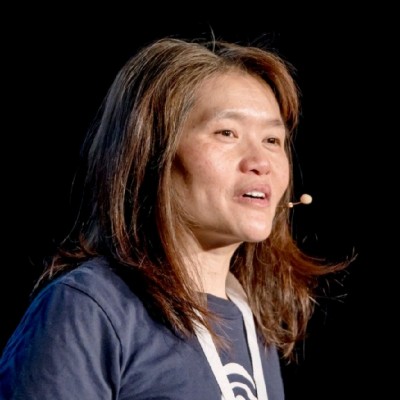
Mary Grygleski
Mary is a Java Champion, and the AI Practice Lead at Callibrity, a consulting firm based in Ohio. She started as an engineer in Unix/C, then transitioned to Java around 2000 and has never looked back since then. After 20+ years of being a software engineer and …