
Foojay Podcast #47: Artificial Intelligence and Machine Learning with Java
 Frank Delporte
About one and a half years ago, ChatGPT was launched.
The way we search for information and develop software has changed a lot since then as the use of Artificial Intelligence suddenly became a lot easier.
What can we expect in the near future, and how can we program AI ourselves with Java? Let’s find out…
Video
Podcast Apps
You can listen and subscribe to the Foojay Podcast on:
- Spotify
- Apple Podcasts
- And most others…
Guests
Lize Raes
- https://www.linkedin.com/in/lize-raes-a8a34110/
- https://twitter.com/LizeRaes
- Personal blog: www.epic.engineering
Lutske de Leeuw
Podcast Host: Frank Delporte
Content
- 00:00 Introduction of the topic and guests
- 01:25 AI and ML, where to begin?
- Foojay Podcast Episode #34: https://foojay.io/today/foojay-podcast-34/
- 05:06 Can LLM help to structure and query data?
- 07:32 About LangChain4j
- Project repository: https://github.com/langchain4j/langchain4j
- Documentation and tutorials: https://docs.langchain4j.dev/
- Talk “Java meets AI: A Hands On Guide to Building LLM Powered Applications with LangChain4j”: https://www.youtube.com/watch?v=BD1MSLbs9KE&t=1s
- Vaadin chatbot in 20 lines of code: https://twitter.com/marcushellberg/status/1760096226522148940
- 11:29 Developers will work differently with AI
- https://foojay.io/today/foojay-podcast-29/
- Talk “The New Superpower in the Developer’s Toolbox” with more insights in where the field of software development will evolve in the AI era): https://www.youtube.com/watch?v=rENT1fDR69I
- 15:36 Concerns about your code being used by models
- 18:17 Labeling data for models
- 19:53 The cost of API requests versus local systems
- 21:26 Future ideas for LangChain4j
- 28:17 LangChain4j examples repository
- 29:20 Problems with a Chat AI User Interface
- 32:54 Is AI just a hype, like blockchain was?
- 36:42 Can AI help us to “fix the world”?
- 38:45 Java evolutions to handle AI better
- 40:56 About TornadoVM and GPU usage
- 43:10 Conclusions
Music
- Barbershop John
- Hermine Deurloo
- Synapse by Shane Ivers - https://www.silvermansound.com
Transcript
Automatically generated from the audio, so it can contain errors in names and technical terms. Suggest a correction.
[0:00] Let’s dive into the fascinating world of artificial intelligence and how we can use it with Java welcome to the f j podcast all your news about OpenJDK about 1 and a half year ago jat GPT was launched the way we search for information and develop software has changed a lot since then as the use of artificial intelligence suddenly became a lot easier what can we expect in the near future and how can we program AI ourselves with Java let’s find out with these guests hi I’m let I’m a software engineer original Java programming and now full stack and with love for machine learning I work at Linus and I talk a lot about machine learning so today we will continue about that hi I’m Lisa I’m a core collaborator of the Lang chain 4G Java framework and also at work I’m head of AI transition so I do love Java and I do love everything AI very excited about what llms change in our programming behavior and I’m Frank the Porto creator of the podcast for Foojay a Java developer and technical writer and very interested in and artificial intelligence and what you can do with it but I’m new to this so I can only
[1:21] Learn today from both of you thank you for joining letka we already talked shortly about your talk at jve full you were in the podcast Episode 34 and the topic of your presentation was machine learning where to begin so that’s I think the perfect question for the start of this podcast where should I start if I’m interested in machine learning AI what can I do yeah before you start with programming because people think oh AI is cool machine learning is cool I want to program it in Java or python or whatever but the data is most important part because most companies they have a lot of data but it’s not information yet it’s just one big pile of pictures and streams of data but it’s not organized it’s not labeled most of the time it’s just rubbished and if you do garbage in it’s garbage out so yeah you need some experts to organize the data and that’s most of the time also a hard question because when you have something for the hospital those experts aren’t table as you would be and if you have the data organized here probably weeks months or sometimes even years further and then the company
[2:50] Says yeah the money is gone we don’t have any budget anymore I so that say it’s very important to know okay how is my data where do I start from yeah I think that’s that’s a bit the thought that’s it’s now become easier to use but indeed if you want to use it in a company related to the things that you’re doing in the company and Gathering the information to be able to do machine learning is probably indeed a very big job that most people underestimate yeah it’s so cool now with take oh I just do some promting and then aut the magic will happens but there’s still a lot of mathematic wordss in the background should I look at artificial intelligence machine learning from two different points so either you use it in your company to know more about your data and on the other hand you can use chat GPT other stuff which already are trains on stuff where you can ask questions which are for much broader topic like we as coders can now ask give me an example of code to achieve this so that’s already trained by others yeah yeah there’s typical to yeah if you want to do it from the start
[4:14] With your own data and don’t want to do it in the cloud because it’s a top secret or something but you want to extract information from it but yeah today there is not like open Ai and GP you can build step on and also if you’re making your own it’s always good to build on the existing one because first smart people already T about it and they train them about hours and hours with models so it’s not that they just made some rubbish know please use them I Al always say that at the first time trying that please build the B already provided for you and now you see some last couple months that also said okay here is this now made it for your own company I have a question for you let go so I come from the other side where we most of the time use the model as a kind of an API and use it into our applications that really Builds on top and then we have some strategies like fine-tuning to make the model know a bit more about what exactly we’re doing or few shot I mean that’s for large language model specifically you’re coming from this raw training side to the question and I was
[5:33] Just wondering can you use llm can you leverage that somehow to structure your data I think you can do it to structure your data but still you need some expert that know the data so you can verify it’s correct what they always needs a verifying person to see if the data is correct I think you get I don’t know to be hon I think youve seen in presentation of youa that there are models available that can search in your SQL data and give you some guidelines on how you can search in them get data from it or results from it correct yes there’s there’s two things there so llms are really very good at creating queries so if you want to know something they can really turn this in a query for you and most of the time this will work so when you would need to restructure data given it’s already in one database or maybe a set of databases with a different schema llms could actually help structuring that all in the same format the other thing you might be referring to are embedding stores where you’re going to store the meaning of your text it’s it’s text for the moment although you can also do it
[6:50] With the text description of images for example and you’re going to vectorize the meaning so turn the meaning into a vector of numbers store that in an embedding store and then if you ask a question you can also create a vector of your question and you will get the pieces with the most similar meaning out of it so that’s like two ways llms can help you in like soft querying for meaning or in hard querying because they can write real queries too and I think yeah there’s really a lot to be done in the future in structuring your data like let AI prepare your data for AI that the computer works for you we all love that as it developer yeah okay it was mentioned a few times LangChain4j Lisa you’re part of this project yes is it the most amazing thing happening in AI for Java at this moment or there more what does Lang chain for J do of course it is so yeah Lang chain for JS one of the existing Java Frameworks or the emerging Java Frameworks to let you interact with llms mainly but also with other types of models I mean it’s it’s definitely at the moment
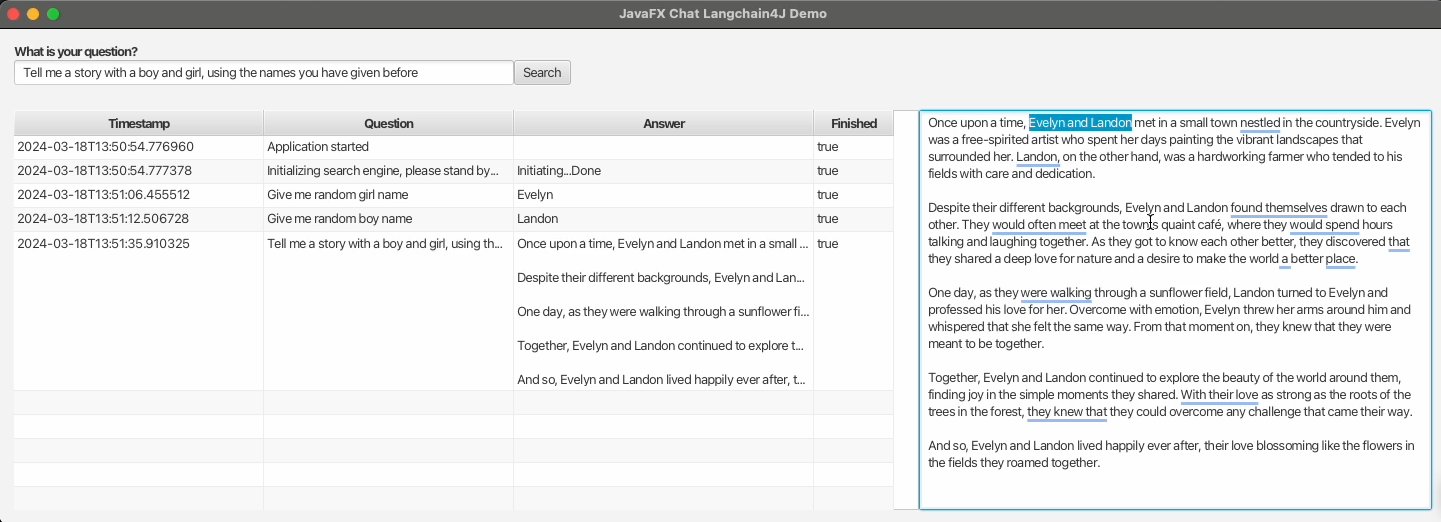
[8:05] The most popular one which makes us very happy and what it does is it makes it super simple for you to go to start chatting with an llm be it provided by for example open AI like that would be GPT you would talk to or there’s so many more Pro providers out there then there is like providers like hugging phase where you can train your own model and then provided from there and it’s also super easy to integrate with a Java and you can also turn local models so we have for example AMA that lets you talk to a model that you’re running locally on your computer and then on top of that so like calling a model got got turned into a twool liner basically where you just you write two lines of code you send in a string of text and you get an answer from your LM which is amazing but then it adds so much functionality on top where you can create functions just by like methods just by describing them it’s called AI Services you say what they have to do you say what type of data you want to come out of there so you can really get plain old Java objects out of it or lists or whatever
[9:15] And then LangChain4j takes care under the hood of parsing all the things correctly and so it’s really this mix between real Java programming with some llms in the background doing work for you MH I saw you talk at devox I think in October it was last year yeah and in one hour you gave 12 examples which was pretty impressive you counted them I looked at the sources of them and the last one where you searched through an a document a text document Give me a summary of this I used it to create an example for myself I talked about at fosm searching through documentation existing documentation because yeah that’s as a doc writer that’s one of the Holy grills we have a chat that only answers with information of my company of my product there are some bit fals to solve yet you can still you can still trick it to give you the wrong answers but you’re right so TW liner you said my example is a bit longer but indeed that’s what I love about Java thanks to all these amazing libraries you can do a lot of stuff with very minimal code and we record this on the 15th of march yesterday I saw a tweet from
[10:36] Marcus Helberg from Vaden he created a chatbot with a web user interface in Spring boot interacting with the chatbot in 26 lines of code isn’t that amazing what we nice right yeah but he uses spring Boot and spring AI is it using Lang chain for J or is it another implementation that spring boot provides it’s an yes it’s another library or framework from Spring boots but I know Marcus he also has a talk where he Compares I think Microsoft semantic kernel Lang chain for J and then spring AI to build the same application I wonder if we can do it in 26 line with LangChain4j but I bet we can I bet you can yes so as a developer a lot has changed I read a few times developers will not lose their job because of these tools they will lose their job because they don’t use them because they are not using the new ways of programming is that a bit your feeling yeah I think that’s that’s true because a lot of people say oh no AI is going to take my job and I don’t believe that because they take the a parts getting the recur stuff and easy stuff and you probably when you’re doing
[12:02] It now you’re like I need to do this again and why and there’s more yeah you now have more creativity in your work because all that’s left you have to think about okay how do I do this solution and you can ask the AI for examples and stuff but still it’s not optimized and even if they put out some garbage you still have to make something working out so I think your job is getting interesting yeah more interesting and if it’s not you’re not using those tools then you’re doing the same old boring job even that’s programming isn’t boring but you get what I yeah yeah I actually looked a bit closer into this question because I had a keyot to give at J Focus so I wanted to make sure I know all about it and then so I also think it will speak is up but at the other hand AI is creating so many new possibilities of what we can automate in society so I think at the moment preparing infrastructure for developers to use AI to help us and really speed up the work that’s that’s that’s a big one so we have Java project python projects there’s so many people at the moment working to make that possible
[13:22] So there’s also a lot of job openings in those domains and then what becomes possible afterwards of type of application we can program we can just take over kind of take over so much more of society or let’s say free free them from the work and that all still also has needs to be programmed and when you look at the job market at the moment in the tech sector so there’s this these terrible layoffs and they’re very often done to say like we want to align our Workforce with our strategic goals and it very often includes laying off the parts of the company that can be automated or I mean yeah all the text to speech and voice recognition it’s yeah AI just you know took the field over overnight so and then but they are also hiring a lot and they’re hiring a lot along along the lines of AI application Engineers ml Engineers so we actually see a skill shift and the best way to stay future proof is to actually join join this movement and see how you can leverage AI l machine learning for your future career and then at the other hand I still think also like we’ve seen with all informatization
[14:37] Of services there are still companies out there doing their work on pen and paper there are still doing it in Excel there’s others that are really on the Frontline with AI and state-ofthe-art and I think this will also stay for Developer jobs for me when I do development I use the AI in the chat to give me an example of how should I could I do this I think that’s that’s a nice approach of how you can use these tools to be inspired yeah that’s certainly true but you also see when the internet came when I was in the in high school there’s just a shift from books from the internet and then you have a whole base of more knowledge but you still have the St for the correct knowledge so that’s still now you have thei that has lots of ideas but you as a program still have to choose okay what I’m going to do with it and is this correct and is this something I can use at the beginning we you mentioned about data is needed for training so we know that all these lsms are trained by all the data which is available on the internet being source code being books there are a lot of concerns about if
[15:52] I use a chat system in my code how is my code getting back back into this model should we be worried as companies as developers that our code leaks I just saw a tweet passing by that some system is providing API keys from other users into his examples so are you mentioned llama that you can run it locally should we look at solutions that run locally only on our own system or is it safe to use these these web- based providers it’s really really voice down to the terms of use of the provider so for example if you use open AI so the gpts via their API then they do not collect your data that’s in their terms of use but at the other hand there’s no warranty something similar happens when you use Bing Bing chat or it changed now to co-pilot right Microsoft version of J GPT then normal usage conditions say like yeah we can we become think we become owner of your data and then we can use it for entertainment purposes things like that so yeah if you’re a company working in a regulated environment you definitely want to avoid using that but they have an Enterprise version where they have
[17:13] Way better conditions where they say we don’t train it’s encrypted when it’s sent to our model it’s never stored Microsoft has no eyes on it so it’s really if you’re a company it’s it’s legal’s task to look through all these terms of use and so there are options there either you use a software as a service provider like open AI either you can run your model in a private cloud and then yeah you just trust your private Cloud security for not having a data breach for example yeah when your code is your IP you would want to do that or you can run it locally which is definitely a great option but it’s also costly and requires some it knowledge to get it running but yeah when you run it locally nothing is leaked yeah what you also can do is analize your data so it’s more like Class A and variable B and all that stuff so you can do it online and use all the sources and has less cost but yeah then you still need that extra step to take so you involved in projects where data gets labeled is that using local systems what systems can you use for that yeah you can the theal way just to do it all Hand
[18:31] By hand but that’s takes very long time and you have couple symtoms and help you with it and that do like 80% for you and then you have to check okay is this what I expected it to be so yeah there are solutions for that we at work at some point also set up a system where you have a kind of moderator model I mean first the hard filter on things we know we definitely don’t want to leave the company then like kind of moderator model locally to say like okay this user question or this piece of code contains really too much that we don’t want to have leaked so we send it to our local model which is definitely less good and when it’s safe or like when we can easily anonymize it then we can send it to I mean gp4 is at the moment really the best one if it’s for complex questions and so yeah we tried to build this system where like we made this cost balance also every llm check or every model check uses a bit of time so you’re definitely slowing down the process like the latency goes up if you have two Checkers and an anonymizer in front but at the other hand which is nice the technolog is getting so much better
[19:46] So this will get faster and I don’t think this latency problem will still be a big issue in say a year from here it also costs money so if you are calling the open API open AI API each requests cost you a bit of money do you think moving this to a local system could be a lot cheaper because yeah you still need Hardware to run it on is it something worth the effort or is for now yeah use what is provided and follow the evolutions yeah for testing definitely you can go with some provider because it’s extra cheap should look the numbers up again but I can I think you can get about 10 pages for $1 if it’s not one cent I would have to check that but it’s it’s really cheap compared to the cost of a server but then if you’re using it intensively your system it’s can definitely be worth investing in local hardware I mean the problem with local hardware is that it’s limited in duration of support so it’s going to last somewhere between two and five years if you’re hard using it you better pay per per token basically with an online provider if you’re going
[21:04] To use it very intensely it can turn out much cheaper like electricity costs are really quite limited and then your local but also the local models at this moment are not on the level like so they’re open source models right and they’re not at the level where like a CLA or a gp4 is today so it also again depends on what you need for your use case if we look at Lang chain for Lees so you’re really involved in the development there I see that there are a lot of releases or at least commits in the project what can we expect from this project in the near future what can you share oh yeah I can share I mean I can share what we want to do but of course we’re not that many people and we don’t have that much time so it’s not a promise that it will come but we are looking at the moment and making this Advanced rag better so Advanced rag is what you told where you go find your documents with this embedding store via meaning that’s what we call rag it’s retrieval augmented generation it’s just a hard word to say chat with your documents or with your data Advanced R allows you to for example do query
[22:15] Expansion so at the moment the user asked for example we’re talking about about Fran and at some point in the discussion we no at some point we ask how old is he like the easy rag will just embed how old is he and it will find in whatever bio or that you uploaded there it will not know that it’s about you so query expansion actually lets an extra large language model bundled the whole discussion from before to make it the best part of meaning that would fit the answer and then we have query routing which actually decides by itself should I go query database the hard deterministic way or should I find the semantically similar meaning Parts in my documents and then we have reranking at the end which says like okay now actually what happens with this retrieval of M generation is that at the moment you do the real call to the llm for the answer you say this was my question and here are all pieces of information we found that could actually guide your answer and I’ll try to make a good answer and like as you said like it’s not a like the easy version is not
[23:30] Not great at the moment it finds for some use cases it’s great and for other it just doesn’t find it or find very wrong things so then we would have a reranking step that will have an extra look like which of these are now actually relevant and only keep these and then it gets really much better so this Advanced rack is a it’s in constant Evolution it’s getting better like every week what else do we have we’re looking into multimodality so we have now image models we can input and output images already with for example jimin imagen do e they’re already supported then of course we will be looking also in voice speech these things see what we can add when we have time we’re looking into State machines that I find Excellent because if you want an llm to run some complex task it’s usually going to fail because it can handle complexity up to certain points but if we already know like oh maybe first we have an input phase where we need to ask our user for data then we have to check it with something else then based on this we have to go back to the user or we have to launch another process this
[24:43] Whole workflow that’s actually intelligence we have beforehand and we only need the llm to then really ask this information and so we working on this state graph concept where you make a state machines with llms inside that will transition to other llms so to say yeah I think and observability yes we are looking into observability which is really important so you could also plug in other tools to actually look what’s going on under the hood there yeah so that we know which tools the model has been calling which other calls it has been making what it has been using as as input what is found out of from your documents which makes it of course yeah way more more suited for Enterprise applications so there’s this observability then there’s some framework for optimization that we want to put in place because your first query like your first prompt that you send in may not give the desired result and then you actually want to do couple of iterations to see if you can get it better we want to bring in place that your llm can help you make it better so to make your own query better
[25:53] And then we’re also looking into unit test and a test framework which is not that easy right because you send in text you get out text and it’s not going to be the same twice because it has some Randomness in there so yeah we’re looking into like unit tests where you ask what’s the capital of Germany and then we just checked that Berlin is part of the answer because we can’t we can’t check the whole answer so yeah we we’re thinking and then we can of course let an llm check if the answer that came out of the unit test is valid so it comes becomes very meta but it’s an important feature for having more robust applications and that’s all inside that one project so how is this all Java code or are this models using other models this sounds so complex how do you do this it sounds complex but it’s not that complex it’s it’s like these iterative function that call themselves it works also for llms so most of the llms provide some form of API which we call from Java MH and that’s the basic blocks behind it in the end then and there’s a lot of parsing going on like Yeah clean up your input par the output
[27:07] Putut which sometimes comes in Json for example and then we can par it to pojo so that’s that’s how it’s happening under the hood all happening for free as an open source project by I think there are many I there are quite a few contributors how do you do this you have a job yeah I must admit I hardly get to write code at the moment since since I’m doing the presenting so I’m I have like two to four presentations a month I’m just preparing new talks I try to help in the documentation and try to contribute the examples and for the rest that’s actually dimitro leki are the founder of L chain for J and he’s also the main contributor and yeah he works day and night it’s amazing so I have these emails arriving in my inbox for all the pool requests and all the comits and so I see what going on it is crazy I hope at some point yeah he gets more help we get more help so we can have a normal life again but it’s now that it has to happen so we do it now but I have been a little contributor I added a little javax example because that’s also great on the LangChain4j
[28:23] You have a separate repository with examples so these that I mentioned from your Devo stock are in there and now my little Java example is there thank you very much what’s coming it’s it’s it’s even nicer we I should do this like I said I would do it this weekend but it didn’t happen it’s GNA come very soon we will make a community examples repository because for now the examples repository you have is very structured very minimal so people yeah we don’t allow people to put huge examples there to keep the overview but we are going to make this community examples repo where everybody can really contribute their either completely crazy projects or their Enterprise projects if they want for everybody to see what can actually be built because our examples are now pretty low level but you can do amazing things and we want to see what the community’s been making and we want also allow everybody to if they want to give a demo somewhere try try out the other people’s examples what I learned from my experiment so was searching in our own docs that I write and the chat could not
[29:27] Answer the difference between two products two of our products so I actually discovered through via chatting with my own docks that they were not complete and I think it was an unexpected use case but it’s actually a very good one I know a bit of the answers that people are asking about our products so if I ask these same questions to a chat can it find it in our documents so that for me that’s one of the very nice use case cases of searching through the docs but yeah we also have a lot of horror stories about I think it’s one of your presentations Leisa that a car dealer has to sell a car for $1 I have a few slies in my presentations with chat interfaces promoting another product from another supplier is chat good already good enough to put in place as an interaction between customer and Company or should we be very careful yeah we should definitely be very careful Which models we’re using if they’re good enough for the job and then very much like the instructions have to be very very specific and very extensive because otherwise indeed
[30:52] You can trick these chat models in doing plenty of things but there there’s other way you can find Juni your model so then you give it a lot of examples of what you exactly want as an output and it will behave like that which also mitigates what it could output that you don’t want there is a few shots that’s that’s really nice so you don’t need to fine tune your model because fine tuning is costly in terms of hardware and time if you use f shot you just give a couple of examples along and you pretend this was the rest of the conversation so you said like ah the user said this you answered this then the user said this you answered this other thing and it will really behave like the examples you give it and then you can really also trim it down to certain certain answer formats but yes you have to be really careful another thing is to limit your input window and to tell your model also to stop interacting if ever the conversation goes in this or that direction and limit this input window because people will use your chatbot as a free chat GPT sometimes it’s like
[31:55] Oh well this can answer everything well I’m going to use this and then yeah you have high bills and then no benefit of it at all yeah yeah it’s to be careful about yes yeah but doesn’t always want to follow the rules because I asked it to only answer Java questions but still was answering python questions so I think my rules were not strict enough it’s it’s called prompt optimization where you try your original prompt and then it doesn’t want it’s particularly bad at hearing what it not should not do so when you say do not answer from python it will depending on how smart your model is it will either do it if you’re lucky or just ignore it or even put python in there because oh it says python so or the nicest thing is when it says like yeah I’m not allowed to answer about Python and you’re like ah I wanted a professional chat but here I think a lot of companies are just researching what they can do with AI now it’s it’s the hype and everyone wants to be within this industry and do something with it but I think for a lot of companies it’s really not clear how they can use their data to find more
[33:12] Information in of it in it and how they can actually do something with it I think that’s for a lot of companies it’s a buzz word but it’s not clear how they can do something with it everyone wants to get on the train and they don’t even know where to start so it’s the good old software yeah example like question as a customer 10 times or 100 times why do you want this what solution do you want from this and then most of the times you get whole other solutions to provide them so yeah it’s just take any book from 19080 and it’s still the same like just why and yes you can do it with machine learning and yes you can do it with AI and I and you everybody loves to do that but yeah it’s just the same but in a different code will we see the same happening as with blockchain everyone wanted to be on the blockchain and now so many years later I don’t see a lot of real good use cases of it I think AI is different yeah me too I think blockchain was just a short hpe and then it was like yeah this is not the solution and now is there’s still a lot that’s not AI is the
[34:41] Solution on machine learning but a lot can provide a little bit of optimalization or most of sometimes speed with it so I think it’s GNA be just one other solutions to do it there’s also a lot of companies that want to jump on the hype not because it’s the hyp but because they think they might be missing out on serious efficiency gains which is also true and you need somebody that knows what’s possible what the implementation costs are how long this goes and then also knows your company processes very well and then see what makes sense to do so like a typical one at least in yeah in traditional companies is people use 20% of their time on average searching for things so that there’s been this study done that that’s one day per week they’re just searching and that’s where llms and AI can really help also joining all the parts of yeah your data lake so all these spread data you have in your company I can actually bridge that and you can then search in and all at the same time and it really fig figures out the relevant Parts if it’s set up in a good way if it’s good enough so
[35:54] There you have huge efficiency gains and then there’s a lot of repetitive work that can be automated especially when it’s like communication and text writing and marketing it it’s really helpful there and then there’s things like Microsoft co-pilot the one that interacts with your documents and your emails and I mean I’m sure that can save you a lot of time but then again you have to look do I work in a regulated environment are these terms of use good enough for what we have but it makes sense for companies it’s really a transition to make to see which tool need to be brought in place for their setup and their processes and it makes sense to get somebody on board that knows what can be done with theyi talk to the people that know the process of the company and then make kind of blueprint one similarity I see with blockchain is the energy consumption so there is a lot of energy needed to train models then to call these apis L you talked in one of your talks you mentioned the sustainable development goal will AI help us to create a better world I believe so yes so
[37:07] Sustainable and development so the sustainable development goals are those from the United Nations and guess climate is one of them but reducing poverty and equal access to Humane work things like that are all in there no hunger so they were not talking literally about the energy consumption of developers when they wrote those down yes so the energy consumption to train models is very high I hope it will be going down so there’s so much Engineers on this puzzle I think it’s going to be like more law again like so I’m from the electronic side where yeah the size of your chip would just go down about every two years with the half the size and it’s pretty sure it’s going to be similar for AI and the mobes and the gpus so we already have lpus pretty recently coming out with Gro not the El musk one the other one so that’s language processing units and they are I think about four times faster when it’s for running a large language model for example and this trend is going to continue so this latency is going to go down the cost is going to go down
[38:20] Ideally then the electricity consumption would go down but as we’ve seen with other things like WID in antennas when the bandwidth would go up for the same electricity cost people would just start streaming their cat videos in HD right yeah so it’s G to be the same with all them so I’m afraid yeah we’re g to use it more you mentioned the models getting better we are in a Java podcast is Java also getting better for machine learning AI handling stuff training models doing all the these kind of things so yes yes they’re totally doing efforts in that direction the biggest one is Project Panama it allows you to have more direct access to Native functions to your Native data your memory so it breaks down a couple of hurdles there I just read that they will have a in Project tornado also GPU garbage collection I mean it’s not there yet but they’re they’re definitely working on it because they also see of course that this is a direction that at least a part of the Java programming language will evolve in so that is very cool we we’re not leveraging it at
[39:41] The moment in our library but I hope like at some point we will also find the time to look more into this machine learning and training part and at things there or maybe some other Library pops up making use of that MH we briefly talked also about this in the Java podcast Foojay podcast about Java 22 yeah we have the six-month release cyle so I guess with LangChain4j and other libraries you don’t jump immediately to the latest version because then you exclude a lot of other applications or developers U but yeah it’s definitely something to keep an eye on because there are a lot of changes there I think Sumatra also is something which is aiming at improving all these things what we do in LangChain4j to solve this we are still compatible with Java 8 because yeah sadly a lot of Enterprise applications this and we want to support those too but then we have certain part of our library that only work on Java 11 and higher so we can also jump on the latest trends but then you can’t use these of course in the Java eight applications okay so we we’ll for sure
[40:54] Be looking into this you mention men Lisa that you can also use tornado VM and they are evolving into this direction so tornado VM is a way to transfer your Java code to the hpu will we see other Evolutions there in improvements for the GPU Evolution if you use like deep learning models and Sh complex you still needed and but for small data sets and stuff the GPU isn’t needed anymore it’s it’s going so fast that you don’t have to use it because it’s very small memory BNS but if you have those complex things or want in real time very fast you still need GPU because that’s optimized for it so the Apu is more there for to train your model that’s when you use these kind of devices yeah but not only for training because if you’re training a small model you don’t need Lally GPU but if you have complex or big things then it’s it’s very heavy to use it’s also important for the bigger models when you want to run them so not only train them but use them some of them are 60 gigabyte big and then you want to be really close with your GPU to your processors so that is
[42:21] Actually you get your answer in decent time frame there’s a lot of clouds you can use the biggest one that’s out there but yeah that will cost you also so yeah that’s the choices you have to make do I want to spend a lot of money and be there like within U not even milliseconds but even faster or do half the time because it’s a complex question and it’s okay what’s also interesting is that Apple for example now on their newest MacBooks they have thing called unified memory that serves both as your normal RAM and your GPU and so they just make sure it’s really close to both your normal processors and to your graphical processors and I expect all Hardware will evolve in that direction and Java will also evolve in that direction with all these new projects going on and being able to support that so a lot of things to Evol to keep an eye on and see how they all evolve a lot of a lot of work for developers too yeah future right so that brings us back to the question will we lose our job no but it will change I don’t think yes that I do think so yeah yeah it will definitely change okay I will add to
[43:35] The show notes link to all the presentations we mentioned both by you and by Lisa a lot that people can still watch after this podcast of course there’s the Lang chain for J Project to take a look at Spring boot also has its AI project a lot of examples and because this is such a Hot Topic if you also keep keep an eye on social media you will definitely see examples of all the different libraries being used thank you for your time both have fun doing all these experiments and working on all these amazing projects and giving presentations and talking about what’s possible thank you also very much to the listeners of this podcast keep an eye on Foojay for future articles and podcasts about development and everything related to the Java World thanks a lot give me a f give me a j give me the friends of OpenJDK
Found a mistake, or something to add? Edit this page on GitHub

Frank Delporte
Frank Delporte is a Java Champion, Java Developer, Senior Technical Writer at Azul, Blogger, Author of "Java Programming for Raspberry Pi - A Hands-On Guide to Electronics and IoT Projects", and Open-Source Contributor for Pi4J, Lottie4J, Sheetmusic4J, …