Foojay Podcast #70: Celebrating 5 Years of Foojay


 2 min read
3,026 views
2 min read
3,026 viewsOn April 25, 2020, Geertjan Wielenga published the first Foojay post. Yes, we are celebrating 5 years since the Friends Of OpenJDK website launch! Today, more than 1,600 posts are on the site, written by over 250 authors. And there is much more to discover within the Foojay world…
In this podcast, we look at how Foojay started with founder Geertjan Wielenga. We’ll also hear from Gerrit Grunwald about how Foojay’s Disco API has become part of your daily work without you realizing it. We also have several of our regular authors and podcast guests who share how Foojay has influenced them (and vice versa).
Thank you all for being part of the Foojay community, whether as a listener of this podcast, a visitor to the website, a user of the Disco API, or through any other touchpoint!
Video
Podcast Apps
You can listen and subscribe to the Foojay Podcast on:
- Spotify
- Apple Podcasts
- And most others…
Content
00:00 Introduction
00:58 Grace Jansen
https://foojay.io/today/author/grace-jansen
02:44 Geertjan Wielenga about the start and evolution of Foojay
https://foojay.io/today/author/geertjan-wielenga/
Foojay on Mastodon: https://foojay.io/today/foojay-mastodon-service-here-it-is/
Java Quick Start Course on Foojay: https://foojay.io/java-quick-start/
JDoodle on Foojay: https://foojay.io/today/integrate-executable-java-code-in-your-blog-posts-part-2-how-to-use-dependencies/
Foojay Slack: https://foojay.io/today/join-slack-com-t-foojay-signup/
Contribute to Foojay: https://foojay.io/today/how-to-submit-your-next-article-on-foojay-io/
12:24 Richard Fichtner
https://foojay.io/today/author/r-fichtner
Free JCon tickets: https://foojay.io/today/free-foojay-io-tickets-for-jcon-europe-2025-cologne/
13:19 Mary Grygleski
https://foojay.io/today/author/mgrygles
15:01 Shai Almog
https://foojay.io/today/author/shai-almog
16:59 Gerrit Grunwald about the Disco API
https://foojay.io/today/author/gerrit-grunwald/
Disco API Blog: https://foojay.io/today/disco-api-helping-you-to-find-any-openjdk-distribution/
Disco API Swagger UI: https://api.foojay.io/swagger-ui
24:38 Simon Ritter
https://foojay.io/today/author/simonritter
25:10 Marit van Dijk
https://foojay.io/today/author/marit-van-dijk
25:47 Hanno Embregts
https://foojay.io/today/author/hanno-embregts
26:42 Bazlur Rahman
https://foojay.io/today/author/bazlur-rahman
29:10 Artur Skowroński
JVM weekly: https://www.linkedin.com/newsletters/jvm-weekly-7097859802881540096
30:22 Conclusion and looking forward to 30 years of Java with James Gosling
Transcript
Automatically generated from the audio, so it can contain errors in names and technical terms. Suggest a correction.
[0:01] On April 25th of 2020, herea published the first Foojay post. Yes, we are celebrating 5 years since the launch of the friends of OpenJDK website. At this moment, there are more than,600 posts on the site written by over 250 authors and there’s much more to discover within the Foojay world. Welcome to the Foojay podcast. All your news about OpenJDK. In this podcast, we take a look back at how Foojay started with founder here. We’ll also hear from Garrett Grunwald about how Foojay’s Discord API has become part of your daily work without you even realizing it. And we have several of our regular authors and podcast guests who share how Foojay has influenced them and vice versa. Let’s start with Chris Johnson. We’re celebrating 5 years of Foojay. Foojay is a fantastic place in which members of the OpenJDK community can come together to learn about all aspects of software development for their Java applications all the way through from sort of the deeper level stuff. We’re looking at things like how do we do memory management effectively? Can we do things like checkpoint restore technologies to enable faster startup for our
[1:22] Applications? all the way through to how do we do security correctly, things like sbomb management, and all the way up to sort of the latest and greatest innovations and trends, things like AI for example, and everything in between. It’s a fantastic place for us to be able to learn from the community, learn from others in our community about these technologies, and also find other resources we can make use of to be able to become better software developers and potentially improve our own Java applications. It’s been a fantastic learning resource for me personally and I’ve had a great time joining this community both as a reader but also as an author too. I’ve published on everything from AI like we talked about looking at applications sort of with LangChain4j all the way through to tooling. So how do we enable more productivity in cloud native application development with proper tooling and effectiveness there? getting recognized with cloud native skills through badging the 12 factor amp methodology. How do we do true production testing with things like test containers and utilizing technologies
[2:28] Like cloud native build packs. So there’s a lot of different topics that I posted about and it’s a fantastic place for me to share this content with others, learn from others and be able to sort of again just have that connection with the open JDA community. So here’s to celebrating 5 years of Foojay is the founder and main maintainer of Foojay. Let’s look back at how it all started. Hello. Normally for the podcast I’m doing online interviews, so it’s very nice to be face to face now. We are in a special location. We are in B central in Antworp. Why is this a special Java location? Bus Central and Antworp is a very special Java location especially for the community because every year when Devox is held here in Antworp this is the place where everyone goes to in the evenings to hang out to network to have a couple of beers and of course it’s a fantastic place because there is a wide selection of beers here but it’s a really Java community oriented place. Everyone who’s been to DevOps and Antworp knows about this place and this is why we’re here.
[3:28] So a tip for everyone who doesn’t have a ticket for the conference during the night of the conference week, you have to be here. That’s right. You can come here for free, have a beer, meet everyone from the community. So yeah, this is a really nice place and it’s a nice place for us to celebrate 5 years of Foojay. Can you tell us how it started? Well, back in the day we used to have Java.net net and this was the place where you would go for information about the Java community. There were blogs, there was an event calendar, there was a lot of information that you would get there. And now since the fragmentation of the OpenJDK across multiple different distributors like Amazon and Red Hat and Azour, etc, etc. there isn’t one single location where you would go to find that kind of information for the community to get together. So five years ago Azour came up with the idea of hey let’s recreate that feeling that community site experience and I’ve been working on it ever since. You have been working on it.
[4:30] Does it mean this is your job? Well this is the key thing that I’m doing at Azour. so that’s really a nice thing to be able to work primarily on community work and bringing the Java developers and architects and testers and everyone together on the common platform with the Slack channel and with the amazing podcast that you’ve set up in the past years. So, it’s it’s really it’s it’s really great that we’re able to do this kind of work for the community. All credits to Eric Oslo who started with the podcast then didn’t have time anymore and I picked it up at some point but yeah it’s great to have this Java feeling and everyone talking about it. Foojay is in first place a website. What is the main focus of the website now for me it’s always been in the first place a network and the starting point for many people is the website Foojay.io. So Foojay stands for friends of OpenJDK. There’s a slack channel but it’s really a way to bring people together and it’s a way to bring organizations together. So for example since since a couple of months now there are a number of sponsors of Foojay
[5:38] Aside from Azour. So, Reddus has significantly contributed to u to Foojay financially as well and a number of other organizations such as Adesso in the Netherlands and also over the years Para and also Digma and since recently an organization called Rio which does developer intelligence. So there’s a whole bunch of different organizations who are now involved not just from a Foojay board perspective but also from the perspective of contributing financially to the swag and to the development and to the maintenance and upkeep of the Foojay website and Slack and so on. A big part of the community within Foojay are the altars. that’s how I got to know you because at some point I saw a message of someone I didn’t know at that time asking for content for a Java platform. I was writing a book. I did my first blog post. It ended with a new job for me even. So who are these authors? It’s a very wide collection of people from all over the community. and what I like is a lot of people that you’ve never heard of before. So it’s a number of key people, thought leaders, Java
[6:48] Champions, well-known people, but there’s also a lot of people who you’ve never heard of who we found all over the world who are interested in contributing to the community, you know, having their name out there, building up a network, building up a reputation. so we provide the platform for that purpose and it’s it’s quite diverse. So everyone who has a blog post related to Java, OpenJDK, Cotlin developer improvements can contribute their content and also there’s an events calendar. So if you’re at an organization or in a community where you have your own events, you can easily add your events to the calendar. So we gathering a view across the community of which events are taking place where. You also mentioned yeah it’s important to bring back the community feeling within Java. We have all these distributors. one great thing within Foojay is the disco API. I also have an interview with Garrett that will be in this podcast. Yeah, it’s really about Java and what whatever people are doing with Java. So I mean we see Foojay as as a platform on top of which
[7:54] Different community projects can happen. So Disco API is one of them. But there’s also been a long-running discussion around a book a Java sustainability book that’s been worked on in there’s a GitHub and etc. and people are contributing content to that. there’s also a skill measurement system that’s come out through open value called GPS which if if you want to evaluate whether somebody really knows how to do Java programming and not simply answer a questionnaire but actually do programming and have that measured there’s a system that we’re working on through Foojay to make that to make that happen. So if you want to work on a community project and bring the community in with you, you have an out-of-the-box community really at Foojay of people all over the world who are happy to be involved or give you advice or maybe advise you on jobs or interviews or coding or it’s it’s a it’s a really a global network of OpenJDK enthusiasts. We also started the mastadon instance. So people who are looking for a new place where they can share the messages that’s also one of
[9:00] The places where they can be what new things will come to Foojay can we expect some changes in the website? Well one interesting thing is that fortunately or unfortunately Foojay the website is a WordPress site. Now in many ways that’s not so great. people in generally don’t like it that much. On the other hand it does its job and the good thing is that it provides a plug-in ecosystem. And one interesting plug-in that we’re looking at is called H5P, which stands for HTML 5 package, which is an very interesting open-source plug-in and community out of Norway by means of which you can create quizzes and educational content. So you could imagine putting together a course on Foojay with interactive elements with quizzes and multiple choice things and stuff like that where the content type isn’t an article as it is by default in WordPress but where the content type could be puzzle or quiz or multiplechoice etc. So that this is going to enrich the possibilities of what you can do on Foojay including providing courses. I added a course already some time ago really getting started with Java the basic basic
[10:12] Which uses I think JD which is an integration to run Java within the website itself but this thing would really add extra functionality. Absolutely. I think it would be nice to look at all the places where we have content that is kind of semi-educational and see if we can, you know, revamp those and bring in some of these interactive elements and make them more interesting and maybe have a collection of these interactive content courses on Foojay. Thanks for all your great work and creating this community within Foojay. what is your call to action for the people who are listening to this podcast? what can they do to contribute or help Foojay? Well, I think it’s really a collaboration platform and the simplest entry point is to join the Slack channel. So, we’re going to put a link to that at the bottom of this, but it’s basically https://bit.ly/join-foojay-slack and you’ll be on the Slack channel. So, you can interact with Java Champions with well-known people from all over the world or less well-known people or people with similar interests to yourself. And secondly to
[11:16] Post the content your tips and tricks and insights onto the Foojay website. So every week there’s new content that we publish. So you can on that Slack channel you find out more about that. But also just queue up your content on the WordPress site and we publish it on a weekly basis. So collaborating means being on the Slack channel and being on the putting content on the WordPress site and contributing content your new or existing blogs and articles and so on. And we will try with this podcast to focus even more on the content which is published on Foojay. So you can even become a guest in this podcast. Absolutely. Yeah. Yeah. And the podcast I mean we’re always looking for more people who you can have conversations with and we’re always at different conferences with the podcast. So this is one really important and vibrant part of the project. So anyone out there who wants to share their insights or working on a project that they want to talk about, I’m sure and that’d be very welcome on the podcast too. I have three more authors to introduce. Ricard
[12:15] Fner, Mari Grileski, and Shai Alm. Check the show notes of this podcast for links to their author pages and their contributions to Foojay. Howdy folks. Foojay is a really good place to find technical content on Java. So there’s a lot of blog posts that you can that you can read, a lot of content to advance your technical skills. But there’s another thing that I really like about this website. This is the event calendar where you can learn about events that happen near you. For example, maybe Java user group meeting. you should really check that out. And there is one more thing that I really like and it’s conferences. There’s one conference that is really dear to me which is JCON Europe which will happen from the 12th of May till the 16th of May this year in Cologne Germany and you can come for free if you’re a Java user group member it’s free for you and the nice folks at Foojay they have a bunch of free tickets for you that you can use because Foojay will also be at JCON do interviews and you can meet the Foojay crew there. So thanks for stopping by and see you at JCON. Hi, this is Mary Griggleski from
[13:22] Chicago. I’m also the organizer of the Chicago Java Users Group. I’m so glad to be celebrating Foojay’s 5 years anniversary. It is so amazing to see Foojay has helped the Java community all over the world and it’s been doing it for 5 years and it is still growing. Lots of great contents here contributed by Java champions, by Java luminaries and just by Java users, Java participants all over the world. It really has been very encouraging and I love to see some more content for example in artificial intelligence and machine learning despite the fact that we think you know Python is leading but I feel that with Java’s strength in scalability in concurrency in resilience these are very very essential capabilities that are needed in real enterprise production environments and I see Java being able to take the lead in there and to really help and turn AI applications to be ready for the real world. For example, in u model context protocol, I see Java capable of having servers that are running those protocols and helping large language models apps to be running very efficiently in them. So I wish Foojay many many years of success ahead and
[14:52] I’m really excited to continue to participate in Foojay and to contribute more articles and contents to it. Good luck. Foojay has been very helpful for me in general both as a platform to reach other people who are passionate about OpenJDK about debugging about all of the things that I’m deeply passionate about. but it’s been far more useful not just as that but as a platform through which we can discover more about OpenJDK about the various flavors and with my current employer being an observability platform we really really get into the nuances of every flavor of Java that’s in the market today and every flavor of OpenJDK today. And while they’re deeply compatible, probably more than any platform in human history, there’s still nuance that we need to know and be ready for. And Foojay is one of those tools in our pocket that helps both keep everyone around here informed about everything related to OpenJDK, but much more than that. It’s a platform for tools that let us target such a massive testing ground and the level of complexity that we need to deal with at Dino Trace is so tremendous that it would be much
[16:32] Harder to accomplish that without a tool like Foojay’s APIs and open- source platforms and even just the posts that explain everything new that we need to distribute to so many developers who all work on OpenJDK or some other Java flavors. So thank you all fellow contributors to Foojay. One of the site projects within Foojay is the Disco API which provides download links for all available OpenJDK distributions. Garrett Grunwald is the creator and I asked him how it all started. So the idea was originally from Gil or CTO and he had the idea that it would be good to have an API where you can get all the different JDK distributions right and just the links not really the download but the link for the download that was the main idea. So we discussed that I think it was directly after Foojay started for some time and then I started coding that stuff. So we started just with at that point it was Tamarind only and Zulu and then I added more and more distributions like I think in the meantime we have also Gravm and we have it’s it’s around 20 distributions that we cover with the API
[18:00] And then it became quite popular. So but it’s not really in a way that people know about it. So it’s tools like Gradel for example, they have a tool chain plugin where they use the disco API to if you set up a project and you have to download a specific version of a JDK then it uses the disco API to get the link for the download and I think with the others it’s very similar. How did you do this? So that means that you ask Azul of course to get the Zulu versions but you do the same with all the other builders of I didn’t really ask to give me the version so I know the API of Zulu. So we have an API at right where you can get the versions of Zulu and I think also of Zing. I used that one first and then I had to figure out all the different APIs and other ways to get the versions which is sometimes quite strange because sometimes I really have to scan a website, load the content, then extract all the links from the site and all these kind of things and then the API has to do that continuously, right? So because I never know when a distribution will offer new
[19:19] Updates. So that means this is running it’s two tasks. One is continuously updating and searching the web for updates and the other one just serves as the API. So this is how and they share a database. So the updator is scanning stuff from everywhere put it in the database and then the API gets it from there. That’s the idea. So that’s the thing you did. You found the difficult way to collect it from all the different distributors. It was very difficult sometimes. And then we have this strange behaviors like for example Gravm they had their own versioning right and that means when I think when OpenJDK still has been to JDK 17 they already had 22 and then at one point they decided oh now we use the same versioning as OpenJDK and suddenly we had the same numbers twice. So I had to find a way to find the right one which still is a problem sometimes. So I got a buck report about that from grad I think where they had this problem which is really it was never the idea to also add grav but in the end I thought it might make sense to have one central place where you can get
[20:35] All the JDK distributions. Mhm. So you did all the hard work. That means that now everyone can find every version of Java in an easy way with one API in the same data model. Yeah, that was the idea. But to be honest, it could be better. So it’s because I mean this was never really made to run in for example GitHub actions on a large scale. Mhm. Because we Azul is also hosting it right. So Azour is paying for the hosting and all that and they also do the running in AWS stuff. So it runs in AWS but this is all managed by our own infrastructure team and the process of deploying it to AWS takes way longer than it takes on my server. So this is sometimes a bit annoying because in at the moment where we do the update we see some blackouts of the API. So that means you trigger something you would like to get a download and suddenly you get nothing back and this is usually the case because the update takes so long but this is that’s the drawback. So this and we have buck reports especially from JBank where they see this problem but they use it in production in GitHub actions and all
[21:51] That. So that was never really the intention to and Gradel is even worse because they really use it everywhere. So they just published an a plug-in for gradal and suddenly everybody is using that and they’re hammering the API. But I think we don’t have a lot of resources running on that. It’s more or less running on one node for the API and one node for the app data and that is running in the cluster. But the fact that all these tools are using it so extensively means that was really something which was missing one source where you can find all this data. Yeah, it’s it’s quite useful. I I’ve wrote my own I think three tools in the meantime that using these things. I mean it’s it’s really useful. I’m lazy, right? So I really hate it to look up websites for is there a new JDK version available because all these different distributions they don’t really publish their updates on the same date. I mean we are as a zool we really are I think within hours after Oracle but sometimes for example tamarind it there was once it took three weeks for the updates so you don’t want to really
[23:02] Check every day for the is there a new update is there a new update so I wrote some tools that just check that three times a day and then give me a notification like oh there is a new update and then I can download those tools and also the disco API itself are described in the Foojay blog post. So, we’ll add the link to the show notes that people can find it and there is a Swagger API on top of it. So, people who want to try it out to integrate it in their own application or tool or whatever, they can do so. Yeah, I created a lots of stuff around the API in the beginning. So, that was mainly during the pandemic and there was lots of time to do these kind of things like browser plugins and all that. But we figured out that most of the people don’t use it and that’s why I don’t really maintain that anymore. So in the end I we just have the API and it works more or less on its own. So I don’t need to do a lot of stuff. But all the other stuff like the plugins for browsers and so we saw that nobody really is using it. So that that’s the reason why you might still stumble upon this stuff on the web but I don’t
[24:08] Maintain it anymore because there was not really big use. Okay. But the swagger UI is really a starting point if you want to find this is part of the API. So the spear API so the documentation that that’s part of the build. So this is always there. Okay. And always up to date. Okay. Yep. Should be. It’s part of the build. So this is the latest I have. Now let’s hear from a few more authors. Simon Ritter Marit Fanu Embra and Bosl Rahman. We’re celebrating 30 years of Java this year and we’ve done various presentations and features around that. And the one thing that I’ve said in terms of my presentation is you have to remember that Java is more than just a software platform. It’s more than just a programming language. It is an ecosystem and it is a community. And I think Foojay is a great way of bringing some of that community together in the same way that we have Java user groups, we have the Java Champions, we have Java conferences, but Foojay is a lovely online way of bringing all this kind of information together in a single place.
[25:10] My name is Marit Fund and I’m a Java champion, developer advocate at Jetrains and author on Foojay. I’ve published articles mostly on intellig idea like how to work with dependencies, git integration, and other useful tips and tricks. I’ve also co-authored a post with Frank Pora on how to become a senior developer. I’ve been invited to several Foojay podcasts and panels like the one for the Duke turns 30 event recently. What I like about the Foojay community is to share our knowledge and learn from and with each other. Thanks for having me. the Foojay community really, you know, brings people together, you know, in the Java community and also if you love writing, it creates an extra audience for the stuff that you want to write and extra opportunities for people to learn from everything you’re doing and funnily enough, I don’t really I don’t perceive writing for Foojay or for any other magazine for that matter as being extra work. I just channel the stuff that I’ve already done into an article or into a talk and it feels much more use more useful if it’s able to reach more people. So that
[26:30] Way a platform like Foojay propels the things we do and increases the impact of everything we do. So that’s what I like about it. I’m Bos Rahman, a software engineer, a Java champion, and a contributing editor at FOJ.io. Over the past five years, I have enjoyed writing articles for FOJ about modern Java features like pattern matching, seal classes, records, and virtual threads. I also regularly share updates and insight about what’s happening in the OpenJDK world. For example, what new J is being incubating. Writing for Puja has allowed me to break down complex topics and make them easier for others to understand. More is most importantly it helped me to articulate properly and I learned that way. It’s it’s just easier for me and I some think it is something that I truly enjoy. being a part of Foojay has made a real difference in my career. It connected me with developers from all over the world. It gave me the confidence to speak at international conferences, write more often and even publish a book. That’s a big deal. the support and encouragement from the Foojay community helped me grow not only as
[27:50] A developer but also as a mentor and educator. I have learned a lot by reading Foojay. This site brings together so many voices with tutorials, interviews, tips and news all in one places. It’s one of the go-to resources when I want to stay up to date with Java ecosystem. looking ahead, I’d love to see more articles that shows how Java is used in real world application, especially in areas like AI, machine learnings and building cloud native systems. It always inspiring to see how others solving problems using Java because I love Java. I simply love Java. FOJ is more than just a website, a more than a blogging platform. It’s it’s a community hub that brings developers together, promotes open collaboration, and keeps the OpenJDK community active and growing. we have a Slack channel where we can, you know, discuss, talk about, share about random things, exchange ideas. I’m proud to be part of it and I’m excited about what’s coming next. Congratulation Foojay on turning five. Here’s to many more years of learning, sharing and growing together. Thank you everyone. A side effect of Foojay has been the many
[29:12] Collaborations that grew out of it like the conference interviews at JCON mentioned earlier by Rickert Vikner. Another notable collaboration is the newsletter by Arthur Skrronsky. Hi, I’m Arthur from JVM Weekly where I publish a monthly roundup on the Foojay. I’m very much a podcast guy. I first heard about Foojay thanks to the inside Java podcast and funnily enough it was also a podcast that kited my old further journey. However, what I really appreciate about Foojay is the bread of topics that art contributors cover. It’s not just about the usual suspects like Japs or JDK releases. You will also find deep dives into tooling, performance, cloud native Java, but also security and community projects. Beyond the content itself, SUJ has introduced me to amazing network of developers, authors and open-source maintainers. Those connections are every bit as valuable to me as the articles.
[30:16] Proof that Foojay is as much about people as it is about code. Thank you all for being part of the Foojay community whether as a listener of this podcast, a visitor of the website, a user of the Discord API or through any other touch point. Also, a big thanks to the many authors who provide a continuous flow of fantastic new content. Thanks for listening to this episode. Please subscribe to the Foojay podcast in your favorite app or on YouTube. Keep an eye on Foojay for future articles and podcasts about development and everything related to the Java world. See you next time when we celebrate 30 years of Java with its creator. Yes, James Gosling. I don’t know how you’re going to edit this into something comprehensible. Challenge accepted. Me the friends of OpenJDK.
Found a mistake, or something to add? Edit this page on GitHub

Frank Delporte
Frank Delporte is a Java Champion, Java Developer, Senior Technical Writer at Azul, Blogger, Author of "Java Programming for Raspberry Pi - A Hands-On Guide to Electronics and IoT Projects", and Open-Source Contributor for Pi4J, Lottie4J, Sheetmusic4J, …
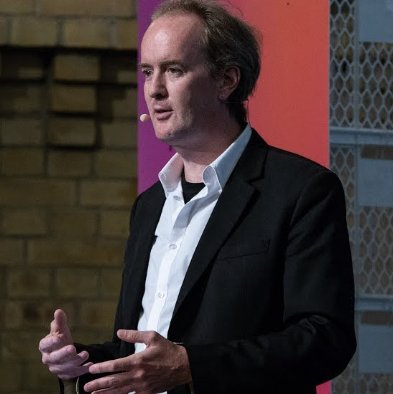
Geertjan Wielenga
Geertjan is an open source and Java enthusiast, Java Champion, Apache Member, and leader of the Amsterdam Java User Group.

Gerrit Grunwald
JUG Leader, Java Champion, Speaker, Author, ❤️ Java(FX) and coding in general